A patio with mismatched furniture and faded cushions doesn’t invite anyone to linger. Transforming an outdoor space isn’t about buying everything new, it’s about layering intentional design choices that make the area feel cohesive, comfortable, and worth using. Whether working with a small balcony or a sprawling deck, the right combination of color, texture, lighting, and accessories turns generic outdoor furniture into a genuine extension of the home. The strategies below focus on practical updates that deliver visual impact without requiring a full renovation or contractor-level skills.
Table of Contents
ToggleKey Takeaways
- Create visual harmony in patio furniture decor ideas by choosing a primary neutral color and two accent colors, then rotate seasonal pieces without replacing base frames.
- Layer textures with quality cushions (high-density foam), throw pillows, and outdoor blankets to add depth and make seating areas feel intentional rather than staged.
- Use layered LED lighting with string lights, task fixtures, and accent uplights to transform your patio into a functional and inviting space after sunset.
- Incorporate varied plant heights and climate-appropriate greenery with vertical gardens on small patios to soften hard edges and maximize space.
- Define your patio with properly sized polypropylene rugs (at least 8′ × 10′ for conversation sets) and pair them with breathable outdoor rug pads to prevent moisture damage.
- Choose functional accessories like weather-resistant side tables, storage deck boxes, and fire features that serve multiple purposes while adding personality to your outdoor space.
Choose a Cohesive Color Palette for Your Outdoor Furniture
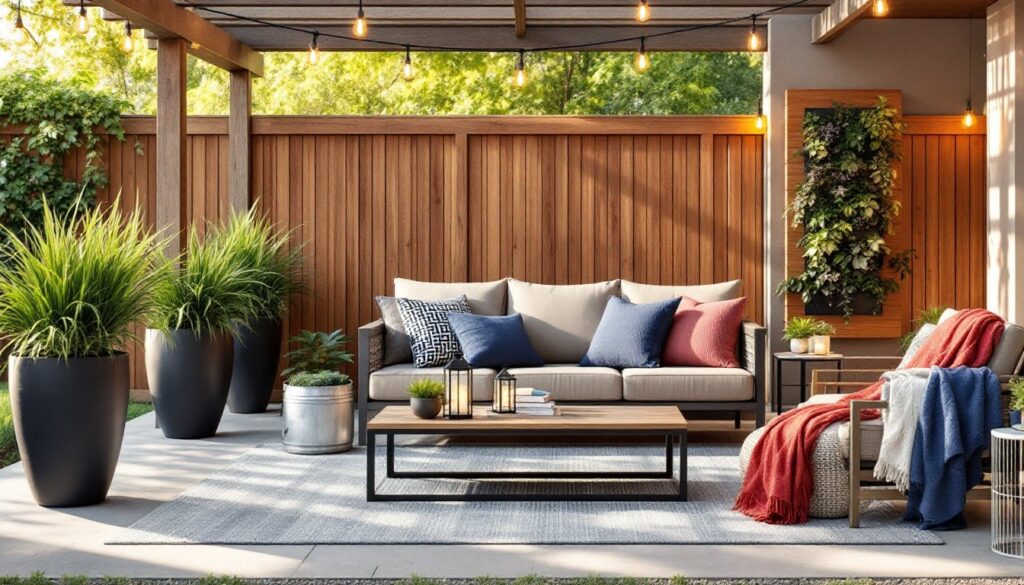
A scattered mix of colors makes any patio feel chaotic. Start by selecting a primary color (typically neutrals like charcoal, taupe, or white for larger furniture pieces) and two accent colors for cushions, pillows, and smaller decor items. This three-color rule creates visual harmony without monotony.
Aluminum and resin wicker furniture in neutral tones provides flexibility, accent colors can rotate seasonally without replacing the base pieces. For coastal settings, navy and coral accents work well against white or gray frames. In desert climates, terracotta and sage green complement natural stone or concrete.
Consider the home’s exterior when choosing colors. If the siding is brick red, pulling that tone into outdoor pillows ties the patio to the architecture. Similarly, if interior spaces visible through patio doors use cool grays, repeating those tones outdoors blurs the line between inside and out.
Weather-resistant fabrics like solution-dyed acrylic (Sunbrella is a common example) hold color longer than standard outdoor textiles. They resist fading from UV exposure and handle moisture without mildewing, which matters in regions with high humidity or frequent rain. Budget roughly $30–$60 per throw pillow for quality outdoor fabric, or less if sewing custom covers from fabric remnants.
Avoid mixing too many patterns. Limit bold prints to one or two accent pieces per seating area, and balance them with solid colors. Stripes and geometrics pair well together, but florals plus plaids plus chevrons create visual noise.
Layer Textures with Outdoor Cushions and Throw Pillows
Flat surfaces feel uninviting. Layering different textures, woven, quilted, smooth, and nubby, adds depth and makes seating areas feel intentional rather than staged.
Start with seat cushions that fit the furniture’s dimensions. Standard patio chair cushions run 18″–20″ deep and 2″–4″ thick. Thicker cushions (4″ or more) require high-density foam (minimum 1.8 lb density) to avoid bottoming out after a season. Cheaper foam compresses quickly and leaves users sitting on the frame.
Add lumbar pillows (12″ × 18″ or 12″ × 20″) in a contrasting texture. If seat cushions are smooth acrylic, try pillows in a chunky weave or faux linen. Mixing matte and slightly glossy finishes also adds interest without clashing.
Outdoor throw blankets in lightweight fabrics work for cool evenings. Look for materials like outdoor fleece or water-resistant chenille that can handle dew or an unexpected sprinkle. Drape one over a chair arm or roll it in a galvanized metal basket near the seating area.
For those interested in blending indoor comfort with outdoor durability, the same layering principles apply, start with a neutral base and build up with accent textures.
Swap pillows seasonally to refresh the look. Lighter fabrics and pastels for spring/summer, richer tones and heavier textures for fall. Store off-season textiles in waterproof storage bins with tight-sealing lids to prevent mold and pest damage. Even “outdoor” fabric benefits from being stored dry when not in use.
Add Ambiance with Strategic Outdoor Lighting
Lighting changes how a patio functions after sunset. Poor lighting makes the space unusable: harsh overhead fixtures feel institutional. The goal is layered lighting, a mix of ambient, task, and accent sources.
String lights are the easiest ambient option. Use LED Edison-style bulbs (2200K–2700K color temperature) for a warm glow that mimics incandescent without the heat or energy draw. Run them along fence lines, pergola beams, or overhead on guide wires tensioned with turnbuckles. For permanent installations, bury low-voltage landscape wire (14-gauge minimum for runs over 50 feet) to avoid tripping hazards and meet NEC outdoor wiring standards.
Solar path lights work for marking walkways but rarely provide enough output for seating areas. For reliable task lighting near grills or dining tables, use 12-volt LED fixtures on a transformer. A 200-watt transformer handles about sixteen 12-watt fixtures, though actual capacity depends on wire length and voltage drop.
Lanterns and candles add accent lighting. Battery-operated LED lanterns with timers eliminate the hassle of matches and won’t blow out in wind. Real candles in hurricane glass or enclosed lanterns work but require supervision. Never leave open flames unattended, especially on wood decks or near fabric cushions.
For drama, add uplighting beneath trees or architectural features. A 3-watt LED uplight at the base of a potted palm or against a stucco wall creates depth. Aim fixtures away from seating to avoid glare.
Dimmer-compatible fixtures offer flexibility. A patio used for both morning coffee and evening entertaining benefits from adjustable brightness. Install dimmers rated for LED loads, standard incandescent dimmers can cause LED bulbs to flicker or hum.
Incorporate Natural Elements and Greenery
Plants soften hard edges and make outdoor spaces feel lush. The key is choosing containers and species that suit the climate and the homeowner’s maintenance tolerance.
Planters in varied heights create visual interest. Group a tall 24″ planter with medium 16″ pots and low **8″ bowls in odd numbers (three or five). Materials matter, fiberglass and resin planters are lightweight and frost-resistant, while glazed ceramic offers color but can crack in freeze-thaw cycles. Unglazed terracotta breathes well but dries out fast in heat.
For low-maintenance options, succulents and ornamental grasses thrive with minimal water. In humid regions, ferns and hostas handle shade and moisture. Match plant choices to sun exposure, full sun means six or more hours of direct light, partial shade is three to six hours, and full shade is under three hours.
Vertical greenery works on small patios. Mount wall planters or a modular living wall system on fences or exterior walls (ensure mounts hit studs or blocking, not just siding). Trailing plants like ivy or sweet potato vine spill over edges and add movement.
Wooden elements bring warmth. A cedar or teak side table (naturally rot-resistant) ages to a silver-gray patina without treatment. For budget-friendly options, pressure-treated pine works if sealed with exterior-grade wood stain every two to three years. Check that any wood furniture or decor is kiln-dried to reduce warping.
Incorporate natural fiber accents like jute or sisal in rugs and baskets, but know they degrade faster than synthetic materials. They’re best under covered patios or brought inside during heavy rain.
Define Your Space with Outdoor Rugs
An outdoor rug anchors furniture and visually separates the patio from the yard. It also feels better underfoot than bare concrete or composite decking.
Polypropylene rugs are the workhorse of outdoor textiles. They resist moisture, mildew, and fading, and most can be hosed off. Expect to pay $60–$200 for a 5′ × 7′ rug, depending on pattern complexity and pile height. Flatweave styles dry faster than high-pile versions.
Size the rug so all furniture legs sit on it, or at least the front legs of seating pieces. A rug that’s too small, where only the coffee table sits on it, looks like an afterthought. For a standard four-piece conversation set (two chairs, loveseat, coffee table), an 8′ × 10′ rug provides adequate coverage.
Rug pads prevent slipping and protect deck surfaces from dye transfer or trapped moisture. Use pads designed for outdoor use, indoor rug pads can deteriorate in UV light. On composite or wood decking, a breathable mesh pad allows airflow and drainage.
Patterns help hide stains and wear. Solid rugs show every spill and dirt track. Geometric or bordered designs camouflage everyday use better. Light colors reflect heat, which matters on south-facing patios in hot climates, while dark rugs absorb heat and can make the space feel warmer visually.
Clean outdoor rugs by shaking out loose debris, hosing them down, and scrubbing with a mix of mild dish soap and water. Let them dry completely before replacing furniture to avoid mildew. Roll and store rugs indoors during winter in freeze-prone areas to extend their lifespan.
Accessorize with Functional Decor Pieces
Accessories give a patio personality, but they should earn their place. Purely decorative items collect dust and clutter, choose pieces that serve a purpose.
Side tables in weather-resistant materials (powder-coated steel, all-weather wicker, sealed wood) hold drinks and snacks. Nesting tables offer flexibility, pull them out when needed, tuck them away when not. Models featuring curated outdoor furniture often balance form and function well.
Outdoor storage keeps cushions and accessories dry. A deck box (120-gallon capacity handles cushions for a four-seat set) doubles as a bench. Galvanized metal bins with lids work for smaller items like candles and blankets. Ensure any storage has drainage holes or a sloped lid so water doesn’t pool.
Serving carts in rust-resistant materials (stainless steel, powder-coated aluminum) make entertaining easier. A two-tier bar cart holds glassware and bottles, and wheels make it easy to move. Look for models with a locking mechanism if the patio isn’t level.
Incorporate outdoor-safe artwork like metal wall sculptures or weather-resistant prints in acrylic frames. Avoid paper-based art or anything with exposed wood backing. Mount securely, wind can turn lightweight decor into projectiles. Use stainless steel or coated screws to prevent rust stains on siding.
Outdoor speakers extend entertaining capabilities. Many models from country-style home and Southern design brands blend into planters or rock shapes. Bluetooth options eliminate wiring hassles. Check the IP rating, IP65 or higher handles rain and dust.
Fire features add warmth and a focal point. A propane fire pit (30,000–50,000 BTU output) provides heat without smoke or ash. Check local fire codes, some jurisdictions restrict open flames on wood decks or within certain distances of structures. Always place fire pits on non-combustible surfaces and keep a fire extinguisher nearby.
Conclusion
Transforming a patio doesn’t require a complete overhaul. Strategic color choices, layered textures, intentional lighting, and functional accessories build a space that feels designed rather than assembled. Focus on durable materials suited to the local climate, and invest in pieces that serve multiple purposes. A well-planned outdoor area extends the home’s usable square footage and creates a spot people actually want to use, not just look at through the window.