Arranging patio furniture isn’t about following a formula, it’s about making your outdoor space work for how you actually use it. A well-planned layout can turn a cluttered deck into a functional zone for dining, lounging, or entertaining, while a careless arrangement leaves you bumping into chairs and wasting square footage. Most homeowners eyeball the placement and end up shifting furniture around all season. Instead, approach it like any other room in your house: measure first, define purpose, and plan traffic flow. This guide walks through the practical steps to arrange your patio furniture so it looks intentional and functions every day.
Table of Contents
ToggleKey Takeaways
- Measure your patio dimensions and furniture sizes first, ensuring 30–36 inches of clearance behind dining chairs and at least 18 inches between furniture groupings for functional comfort.
- Define your patio’s purpose and create distinct zones for dining, lounging, or entertaining to avoid cramping multiple functions into a single cluttered space.
- Orient your patio furniture arrangement around a focal point like a fire pit, view, or statement table to anchor the layout and create visual intentionality.
- Maintain 6–8 feet between facing sofas or chairs for ideal conversation spacing, and keep coffee tables 14–18 inches from the sofa edge for guest comfort.
- Plan traffic flow by mapping walkways with a 36-inch minimum clearance to doorways, grills, and stairs, and adjust furniture placement seasonally to accommodate changing needs.
- For small patios under 100 square feet, choose multipurpose furniture like storage benches and nesting tables, and use vertical space and light colors to maximize the area.
Measure Your Patio Space Before You Start
Grab a 25-foot tape measure and record the full dimensions of your patio, length, width, and any irregular angles or cutouts. If you have a covered area, note where posts or columns sit: they’ll dictate furniture placement. Mark fixed features like built-in planters, grills, stairs, or AC units on a rough sketch or use a free app like MagicPlan to create a scaled floor plan.
Measure your furniture next. Record the width, depth, and height of each piece, sofas, chairs, tables, fire pits. Don’t forget clearance: you need 30 to 36 inches behind chairs for people to push back from a dining table, and at least 18 inches of walkway between furniture groupings. These aren’t design preferences, they’re functional minimums to avoid a cramped layout.
If you’re shopping for new furniture, bring your measurements to the store or compare them against product specs online. A sectional sofa that looks perfect in a showroom can overwhelm a 10×12-foot patio. Knowing your dimensions prevents expensive mistakes and returns.
Define Your Patio’s Purpose and Zones
Decide what you need the patio to do before you place a single chair. Will it serve as an outdoor dining room, a lounging area, a play zone for kids, or a combination? Trying to cram every function into a small space results in a layout that does nothing well.
For patios over 200 square feet, consider creating distinct zones. A dining area with a table and chairs can sit near the house for easy access to the kitchen, while a conversation area with a sofa and fire pit occupies the far corner. Use an outdoor rug (typically 5×7 or 8×10 feet) to visually anchor each zone. Rugs also protect composite or concrete surfaces and add a layer of comfort underfoot.
If your patio is narrow or oddly shaped, arranging furniture by function can help maximize usability. A long, skinny patio works well as a linear dining space, while an L-shaped layout can separate lounging from cooking. Sketch zones on your floor plan before moving furniture to confirm everything fits with proper clearances.
Choose a Focal Point for Your Layout
Every successful patio arrangement revolves around a focal point, something that draws the eye and anchors the space. Common options include a fire pit, a view (mountains, garden, pool), a built-in outdoor fireplace, or even a statement dining table. Identify what naturally dominates your patio and orient seating toward it.
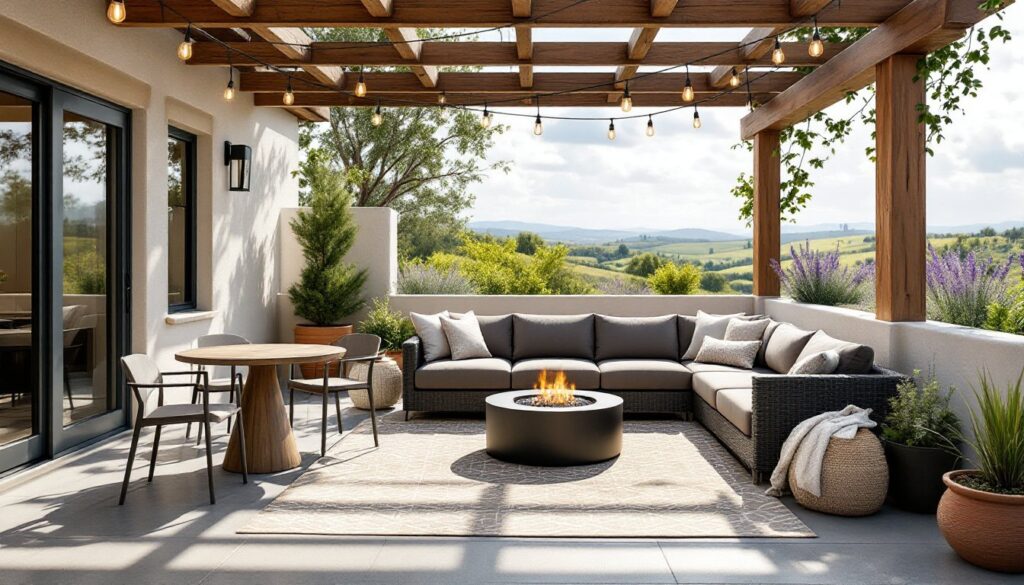
If your patio lacks a built-in focal point, create one. A large sectional sofa facing a portable propane fire pit instantly defines the layout. Alternatively, position a dining table under a pergola with string lights overhead. The focal point doesn’t need to be expensive, it just needs to be intentional.
Avoid pushing all furniture against the walls unless your patio is very small. Floating furniture around a central focal point (like a fire pit or coffee table) creates intimacy and makes the space feel designed rather than leftover. Leave at least 12 to 18 inches between the back of seating and the patio edge for a polished look and easy access.
Create Conversation Areas with Proper Spacing
The goal of a conversation area is comfort and connection. Arrange seating so people can make eye contact without shouting across a gap or sitting uncomfortably close. The ideal distance between facing sofas or chairs is 6 to 8 feet, close enough to pass a drink, far enough to stretch your legs.
Use a coffee table or ottoman as the centerpiece. Keep it within 14 to 18 inches of the sofa edge so guests can set down a glass without leaning forward awkwardly. Round or oval tables work well in tight spaces because they eliminate sharp corners and improve traffic flow.
For larger patios, outdoor furniture arrangements often include multiple conversation zones. A four-piece sectional with a fire pit can anchor one area, while a pair of lounge chairs with a side table occupies another. Just ensure each zone maintains its own breathing room, crowding them together defeats the purpose. If you’re working with a mix of furniture styles, tie the zones together with matching cushions, throw pillows, or coordinating rugs.
Balance Traffic Flow and Functionality
Patio furniture that blocks doorways, grills, or stairs creates frustration every time someone moves through the space. Map primary traffic paths before finalizing your layout. The route from the house to the yard, from the dining table to the grill, and around seating areas should have a clear 36-inch minimum walkway. Wider is better if you’re hosting groups or moving furniture frequently.
If your patio doubles as a pass-through to the yard or pool, avoid placing furniture in the natural walking line. Push seating and tables to the perimeter or arrange them perpendicular to the flow. For patios with sliding doors, leave enough clearance so the door can open fully without hitting furniture, usually 24 to 30 inches from the door swing.
Consider how you’ll use the space in different seasons. If you stack furniture in winter or need to roll a grill out for cleaning, plan for that movement. Lightweight aluminum or resin wicker furniture is easier to shift than heavy wrought iron or teak. For permanent arrangements, opt for modular pieces that can be reconfigured when needs change.
Maximize Small Patio Layouts
Small patios (under 100 square feet) require ruthless editing. Choose furniture that serves multiple purposes, a storage bench that holds cushions, a dining table that folds down, or nesting side tables that tuck away when not in use. Every piece should earn its spot.
Bistro sets (a small round table with two chairs) fit tight spaces and work well for morning coffee or casual meals. If dining isn’t a priority, skip the table entirely and use a compact loveseat with a small side table. Push furniture against walls or into corners to open up the center of the patio for movement.
Vertical space matters on small patios. Wall-mounted planters, hanging lights, and trellises draw the eye up and make the area feel larger. Stick to a simple color palette, too many patterns or bold colors in a small space create visual clutter. Light-toned cushions and furniture reflect sunlight and make the patio feel airier than dark, heavy pieces.
Avoid oversized umbrellas or tall privacy screens that overwhelm the footprint. Instead, use a cantilever umbrella mounted to the side or a retractable awning that doesn’t intrude on usable space. Patio furniture arrangement ideas often highlight compact solutions that don’t sacrifice comfort for size.
Conclusion
Arranging patio furniture is a practical exercise in measuring, planning, and editing. Start with accurate dimensions, define how you’ll use the space, and build around a focal point that anchors the layout. Prioritize comfort, clearance, and traffic flow over cramming in extra pieces. Whether you’re working with a sprawling deck or a compact balcony, a thoughtful arrangement makes your outdoor space more functional and inviting every day of the season.