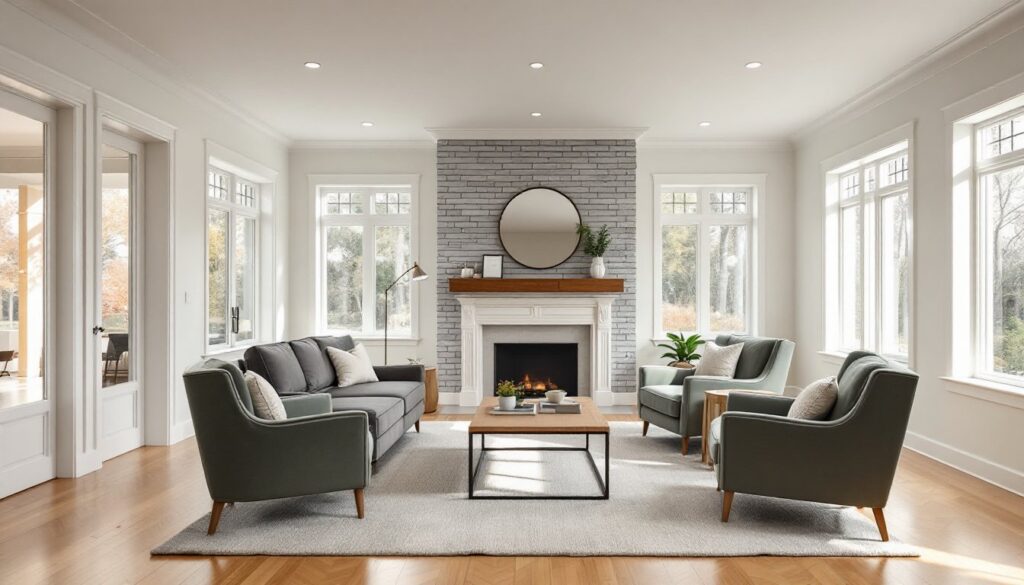
Rectangular living rooms with fireplaces present a unique design puzzle. The elongated shape can feel tunnel-like if furniture hugs the walls, and the fireplace demands attention without always being the only focal point. Many homeowners end up with awkward traffic patterns, seating too far from conversation range, or a TV competing with the hearth. The good news? With deliberate furniture placement and an understanding of scale, these rooms can become some of the most functional and inviting spaces in a home. This guide walks through seven proven layout strategies that address proportion, flow, and competing focal points, no guesswork required.
Table of Contents
ToggleKey Takeaways
- A furniture layout for rectangular living rooms must account for competing focal points like fireplaces and TVs by either mounting the TV above the mantel (at seated eye level), placing it on an adjacent wall, or prioritizing the fireplace as the primary focal point.
- Maintain at least 30–36 inches of clearance for primary traffic paths and position sofas 8–10 feet from the fireplace to balance comfort and conversation range without overwhelming viewers.
- Use floating furniture arrangements in rooms longer than 20 feet, positioning the sofa 3–4 feet from the fireplace wall with a large area rug (8′ × 10′ minimum) to anchor the seating and eliminate the tunnel-like effect.
- Divide longer rectangular living spaces into dual zones with the primary seating facing the fireplace and a secondary media or reading zone at least 10–12 feet away, separated by subtle dividers like consoles or rugs rather than walls.
- Test your rectangular living room layout with painter’s tape before purchasing furniture to ensure adequate spacing between sofas and coffee tables (14–18 inches) and confirm that sofas fit through doorways and hallways.
- Balance visual weight by flanking the fireplace with matching accent chairs in symmetrical layouts, maintaining consistent end table heights (24–26 inches) and using task lighting to create vertical interest without glare.
Understanding Your Rectangular Living Room Layout Challenges
Rectangular rooms magnify proportion problems. A room measuring 12′ × 20′ feels fundamentally different from one that’s 14′ × 24′, even though both are rectangular. The fireplace location, centered on a short wall, offset on a long wall, or tucked into a corner, dictates how much usable floor space remains.
The most common mistakes include pushing all furniture against the perimeter (creating a bowling alley effect), orienting everything toward the fireplace while ignoring secondary activities like TV viewing or reading, and failing to account for traffic lanes. A standard traffic path requires 30–36 inches of clearance, but many layouts leave only 18–24 inches, forcing people to squeeze past coffee tables or trip over ottoman corners.
Measure the room’s actual dimensions, not just eyeball them. Note door swings, window placements, and any built-ins or radiators that limit furniture placement. Sketch a scaled floor plan on graph paper (¼ inch = 1 foot works well) or use a free tool like RoomSketcher. Mark the fireplace, windows, electrical outlets, and cable/ethernet jacks, these anchor points determine what layouts are even possible.
How to Determine Your Focal Point: Fireplace vs. TV Placement
In theory, the fireplace should be the star. In practice, most households watch TV more often than they light fires. Forcing everyone to choose between a crackling fire and movie night creates tension, literal and aesthetic.
Three common solutions: mount the TV above the fireplace (simplest but not always ergonomic, viewing height should place the center of the screen at seated eye level, roughly 42 inches from the floor, and mantels often push TVs higher), place the TV on an adjacent wall perpendicular to the fireplace (works well in rooms wide enough to support two seating groups), or use the fireplace as the primary focal point and relocate TV viewing to a separate den or basement.
If mounting above the mantel, ensure the TV doesn’t exceed the fireplace width, a 65-inch TV (roughly 57 inches wide) looks balanced over a 60-inch fireplace opening, but dwarfs a 40-inch surround. Use a tilting or pull-down mount to adjust viewing angle and reduce neck strain. Some design ideas for rectangular spaces emphasize creating visual hierarchy with layered focal points rather than forcing one element to dominate.
For side-by-side arrangements, the sofa often floats in the center of the room, angled slightly toward both the fireplace and TV. This compromise works if the room is at least 14 feet wide, narrower spaces feel cramped with a floating sofa and flanking side tables.
The Classic Symmetrical Layout Around Your Fireplace
Symmetry delivers instant visual calm. Flanking the fireplace with matching chairs or built-ins creates balance, while a sofa facing the hearth anchors the conversation zone.
Arranging Seating for Balance and Conversation
Place a sofa opposite the fireplace, roughly 8–10 feet away, closer feels too warm (literally), farther breaks conversational intimacy. Add two accent chairs or a loveseat perpendicular to the sofa, forming a U-shape. A coffee table sits in the center, ideally 18 inches from the sofa edge and low enough (16–18 inches high) to avoid blocking sightlines.
End tables flanking the sofa should match in height (24–26 inches) for visual continuity. Table lamps provide task lighting and vertical interest, shades should sit at eye level when seated to avoid glare.
This layout works best in rooms 12–14 feet wide and 18–22 feet long. Narrower rooms can’t accommodate perpendicular chairs without blocking traffic: wider rooms leave too much empty space behind the sofa. For rooms at the small end of that range, swap full-size accent chairs for armless slipper chairs or a narrow bench to save 6–8 inches per seat.
Floating Furniture Arrangements for Longer Rectangular Rooms
Rooms longer than 20 feet benefit from floating the sofa away from walls, breaking the tunnel effect and creating usable space on all sides.
Position the sofa 3–4 feet from the fireplace wall, facing the hearth. This leaves room for a console table behind the sofa, useful for lamps, drinks, or display without requiring a bulky bookcase. A sofa table (typically 30–36 inches high and 10–14 inches deep) shouldn’t exceed the sofa length: stopping 6 inches short on each end looks intentional.
Float a pair of armchairs or a loveseat opposite the sofa, angled slightly inward. This creates a conversation square with the fireplace as backdrop. Add a large area rug, at least 8′ × 10′ for most rooms, 9′ × 12′ if the space allows, to anchor the grouping. All front legs of seating should rest on the rug: floating furniture without a rug feels disconnected.
Behind the secondary seating, use the remaining length for a secondary function: a writing desk, bookshelf, or console with storage. This transforms dead space into a mini home office or library nook. Make sure there’s at least 36 inches between the back of the chairs and the desk for comfortable passage.
Creating Dual Zones in Your Rectangular Living Space
Dividing a long rectangle into two distinct zones, conversation area and media/reading area, maximizes function without building walls.
Place the primary seating (sofa and chairs) facing the fireplace in the first zone. Then, at least 10–12 feet away, create a second grouping: a media console and loveseat or sectional oriented toward the TV on a side wall, or a pair of reading chairs flanking a bookshelf or floor lamp.
Use a console table or open bookshelf (not a solid hutch) as a subtle divider between zones. This provides storage and display space without blocking light or sightlines. Alternatively, a large area rug in each zone signals separate functions, choose rugs that share a color palette but differ in pattern or scale.
Lighting reinforces zoning. A chandelier or pendant centers over the conversation area, while floor lamps or sconces illuminate the reading or media zone. Avoid relying solely on overhead recessed lights, they flatten the room and create harsh shadows.
Many contemporary interior design approaches incorporate dual zones in open-plan living areas by layering rugs, varying furniture heights, and using sculptural lighting as both function and partition. This technique works especially well in rooms 24 feet or longer.
Traffic Flow and Spacing Guidelines for Comfort
Even a beautiful layout fails if people can’t move through the room comfortably. The 36-inch rule applies to all primary pathways, entries, hallways between zones, and routes to windows or doors.
Between the sofa and coffee table, maintain 14–18 inches. Less than 14 inches makes it hard to set down a drink or prop up feet: more than 18 inches requires awkward leaning. Between a coffee table and opposing chairs, allow 24–30 inches for legroom and passage.
If the fireplace sits on a short wall and the main entry is on the opposite short wall, avoid placing the sofa directly in the natural traffic path. Either float it perpendicular to the flow or angle it slightly so people can pass behind without squeezing between furniture and walls.
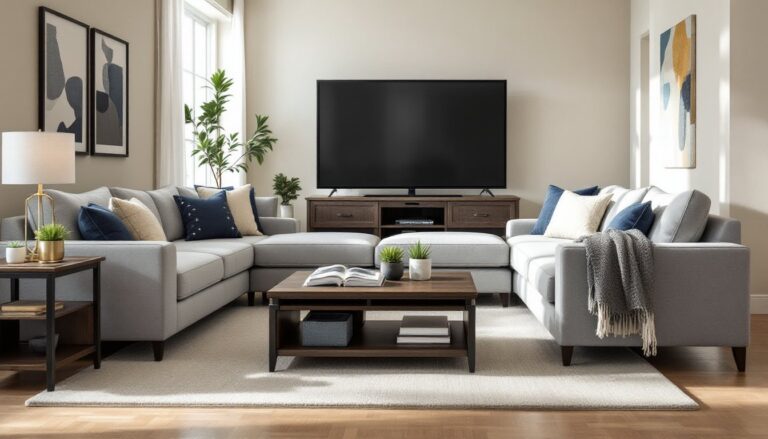
Sectionals in rectangular rooms can block traffic if placed carelessly. An L-shaped sectional works well in a corner, with the chaise extending into the room, but ensure at least 30 inches of clearance on the open side. U-shaped sectionals are too bulky for most rectangular spaces under 16 feet wide.
Test clearances with painter’s tape on the floor before buying furniture. Mark out the footprint of sofas, tables, and chairs, then walk the room. If you’re turning sideways or stepping over tape lines, the layout needs adjustment. Several modern decor resources recommend this low-tech walk-through to catch spacing issues before furniture arrives.
Finally, scale matters. A 90-inch sofa (standard three-seater) works in a 12′ × 18′ room, but a 100-inch or longer piece overwhelms the space. Measure doorways and hallways, too, many sofas arrive in pieces, but some (especially vintage or custom pieces) won’t make the turn into a narrow entry. Confirm dimensions before ordering, and if in doubt, choose modular seating that disassembles.