Cast iron outdoor furniture has been anchoring gardens and patios for centuries, and for good reason. It’s heavy enough to stay put during summer storms, durable enough to outlast cheaper alternatives, and attractive in ways that resin and aluminum just can’t match. If you’re considering cast iron patio furniture for your outdoor space, you’re looking at pieces that can last decades with the right care. But it’s not all upside. The weight, maintenance requirements, and upfront cost deserve honest consideration. This guide walks through what makes cast iron worth the investment, what to expect in terms of upkeep, and how to choose pieces that’ll serve your space for years.
Table of Contents
ToggleKey Takeaways
- Cast iron patio furniture delivers unmatched durability and stability, lasting 30+ years with routine maintenance, making it a genuine long-term investment for outdoor spaces.
- The weight of cast iron patio furniture—40–60 pounds per chair, 100+ pounds for benches—prevents tipping and sliding while also requiring two-person handling and thoughtful rearrangement decisions.
- Proper maintenance involves monthly wiping, annual paint inspections, applying protective wax twice yearly, and avoiding pressure washing to prevent rust and weather damage.
- Quality cast iron patio furniture requires scrutiny of finish quality, welds, and material authenticity before purchase, with prices ranging from $300–$400 for bistro sets to $800–$1,500+ for full dining sets.
- Cast iron is susceptible to rust in humid and coastal climates, necessitating proactive care schedules and seasonal storage in freezing regions to extend furniture lifespan.
What Makes Cast Iron Patio Furniture So Appealing?
Cast iron’s mass is its defining trait. A single chair can weigh 40–60 pounds, benches easily push 100 pounds or more. That heft means stability, no tipping in wind, no sliding on uneven flagstone. It’s a practical advantage if you live in an area with gusty afternoons or if your patio sees foot traffic from kids and dogs.
The aesthetic appeal is equally strong. Cast iron takes detail well. Ornate Victorian scrollwork, Art Deco geometry, or clean modern lines all translate cleanly in a mold. The surface texture, slightly matte, sometimes with visible casting marks, gives character that powder-coated aluminum can’t replicate. Paint adheres well to cast iron, so you’ll find pieces in everything from classic black to verdigris green or custom colors.
Durability is the third pillar. Properly maintained cast iron doesn’t crack, warp, or degrade under UV exposure the way plastic does. It won’t corrode through like thin-gauge steel. Frames can support 300+ pounds without flexing. You’re buying something that could reasonably stay in service for 30 years or more, a genuine long-term investment rather than a seasonal placeholder.
Types of Cast Iron Patio Furniture to Consider
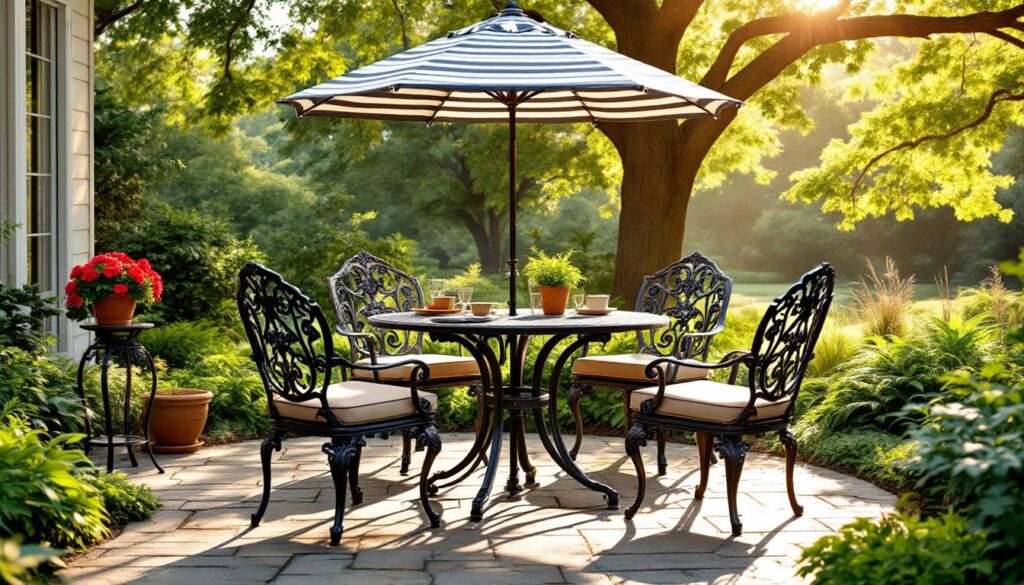
Dining sets are the most common configuration: a round or rectangular table with four to six chairs. Tables typically feature a center umbrella hole and slatted or solid tops. Chairs often have contoured seats and backs cast in one piece with separate legs bolted on. Expect a full five-piece dining set to weigh 250–350 pounds total.
Benches range from two-seaters (around 75 pounds) to three-seaters pushing 120 pounds. Garden benches often incorporate decorative motifs, grape vines, ferns, lattice patterns. Some have wooden slat seats for a softer sit: all-iron versions are more durable but benefit from cushions.
Bistro sets, a small table and two chairs, work well for balconies or tight patios. These sets are lighter (60–90 pounds combined) and easier to move, though still substantial compared to folding metal alternatives.
Accent pieces include plant stands, side tables, and occasional chairs. These are where you’ll find the most ornate casting work. A tiered plant stand might weigh 30 pounds but hold 150+ pounds of potted plants without any flex.
Some manufacturers blend materials: cast iron frames with wooden seat slats, or aluminum table tops on cast iron bases. These hybrids reduce weight and cost but sacrifice some of the all-iron durability.
Pros and Cons of Cast Iron Outdoor Furniture
Advantages:
- Longevity: With routine maintenance, cast iron furniture can outlast the homeowner. Antique pieces from the 1800s still function perfectly.
- Stability: Weight keeps everything grounded. No need for tie-downs or weights.
- Repairability: Broken welds or cracked joints can be re-welded. Rust can be sanded and repainted. Few other materials offer this kind of serviceability.
- Aesthetic permanence: The look doesn’t date. A well-chosen cast iron piece fits traditional, transitional, and even some modern landscape styles.
Disadvantages:
- Weight: Moving a full dining set requires at least two people and possibly a dolly. Rearranging your patio layout isn’t a casual weekend whim.
- Rust susceptibility: Bare or poorly finished cast iron will rust. Coastal environments and high humidity accelerate this. You’re committing to a maintenance schedule.
- Heat retention: On a sunny day, cast iron gets hot to the touch. Cushions are almost mandatory for seating comfort in summer.
- Cost: Quality cast iron patio furniture isn’t cheap. A basic bistro set starts around $300–$400: full dining sets can run $800–$1,500 or more depending on finish and detail work.
- Shipping challenges: Freight costs reflect the weight. Online orders often arrive via truck delivery rather than parcel service, and you may need to move pieces from curb to backyard yourself.
How to Maintain and Care for Cast Iron Patio Pieces
Routine care keeps cast iron looking good and prevents structural issues down the road. At minimum, wipe down surfaces monthly during active seasons. Use a damp cloth to remove pollen, dirt, and organic debris. If grime builds up, a mild dish soap solution and a soft-bristle brush work well. Rinse thoroughly and dry with a towel, standing water accelerates rust.
Inspect paint annually. Look for chips, cracks, or bubbling. Any breach in the finish exposes raw iron to moisture. Small chips can be touched up with rust-inhibiting metal primer followed by outdoor enamel paint in a matching color. Larger areas may need sanding down to bare metal, priming, and repainting. Use 80–120 grit sandpaper to feather edges and remove loose paint.
Apply a protective wax or sealant once or twice a year, especially if your furniture lives in full sun or gets regular rain exposure. Automotive paste wax works fine: apply a thin coat, let it haze, then buff. This adds a moisture barrier and makes cleaning easier.
Preventing Rust and Weather Damage
Rust is the enemy. Cast iron oxidizes quickly when moisture contacts bare metal. If you spot surface rust (orange discoloration, slightly rough texture), act fast. Scrub the area with a wire brush or fine steel wool until you reach clean metal. Wipe down with mineral spirits to remove residue, then prime and paint immediately.
For deeper rust, pitting, flaking, or structural weakness, you’ll need to sand more aggressively or use a rust converter product that chemically transforms rust into a stable compound. Follow up with primer and topcoat.
Seasonal storage extends life significantly. If you experience freezing winters, consider moving pieces into a shed, garage, or at minimum covering them with breathable outdoor furniture covers (not plastic tarps, which trap condensation). Before covering, clean thoroughly and apply a coat of wax.
In milder climates, year-round outdoor placement is fine, but plan on repainting every 3–5 years depending on exposure. Heavy shade extends finish life: full sun and salt air shorten it.
Avoid pressure washing. The force can strip paint and drive water into joints where it sits and rusts from the inside. Stick with hand washing and a garden hose for rinsing.
Buying Guide: What to Look for When Shopping
Check the finish quality before you buy. Run your hand over the surface. It should be smooth, without drips, thin spots, or bare patches. Powder-coated finishes are more durable than brush-applied enamel, though both work if applied correctly. Look for multiple coats, primer plus at least one topcoat, ideally two.
Examine joints and welds. Cast iron pieces are typically bolted or welded together. Bolted joints should be snug with lock washers or nylon inserts to prevent loosening. Welds should be smooth and fully penetrated, not just surface beads that’ll crack under load. If buying in person, gently test joints for play or flex.
Verify weight and material. Some budget “cast iron look” furniture is actually cast aluminum or stamped steel painted to resemble iron. True cast iron is significantly heavier and has a duller ring when tapped, aluminum sounds more bell-like. If the product description lists weight and it seems suspiciously light for the size, confirm material composition.
Consider seating comfort. Cast iron chairs are often contoured, but the fit varies. Sit in them if possible. Some designs suit upright dining posture: others are reclined for lounging. Most benefit from outdoor cushions, look for UV-resistant fabric with quick-dry foam cores. Cushions also protect the finish from metal-on-metal wear if you stack or move chairs.
Source from reputable sellers. Online marketplaces have inconsistent quality. Established outdoor furniture retailers typically offer better quality control and return policies. For vintage or antique pieces, inspect closely for structural damage, deep rust, or previous repairs that might fail.
Match style to your landscape. Ornate Victorian ironwork suits traditional gardens with brick or stone hardscapes. Simpler, geometric designs work better in contemporary or minimalist outdoor settings. Black and dark green are the most versatile colors: brighter hues make bold statements but may clash with seasonal plantings and garden elements as your landscape evolves.
Budget for accessories. Factor in cushions ($50–$150 for a set), an outdoor umbrella if the table has a hole ($75–$300), and potentially furniture pads or glides if you’re placing pieces on a wood deck to prevent scratching ($10–$20). These aren’t optional, they’re part of making the furniture functional.
Conclusion
Cast iron patio furniture delivers durability, stability, and classic looks that few other materials can match. It’s not a low-maintenance choice, and the weight makes rearranging your outdoor layout a deliberate decision rather than a spontaneous one. But for homeowners willing to commit to seasonal care, cleaning, inspecting, touching up paint, cast iron offers a level of permanence that turns a patio into a true outdoor room. Choose quality pieces with solid finishes, plan for cushions and covers, and you’ll have seating and tables that age gracefully through decades of summer cookouts and morning coffee.