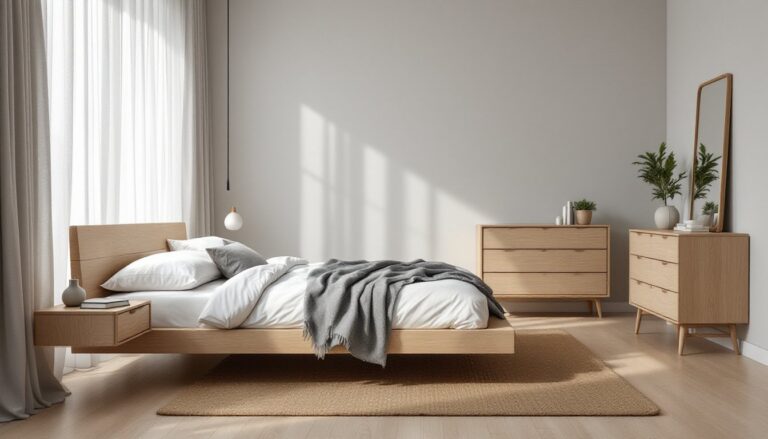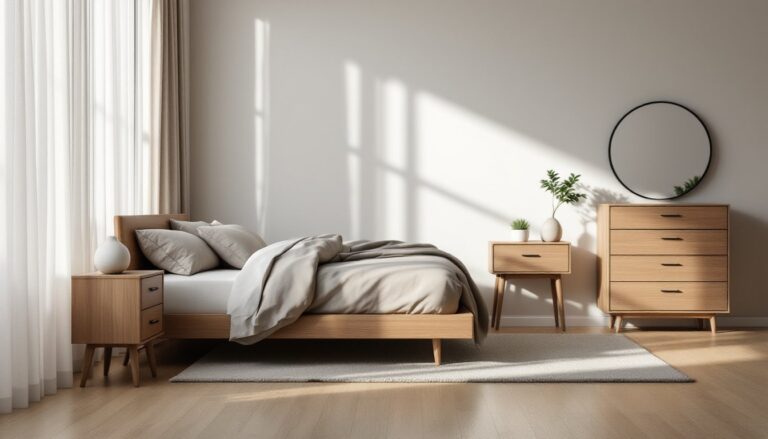
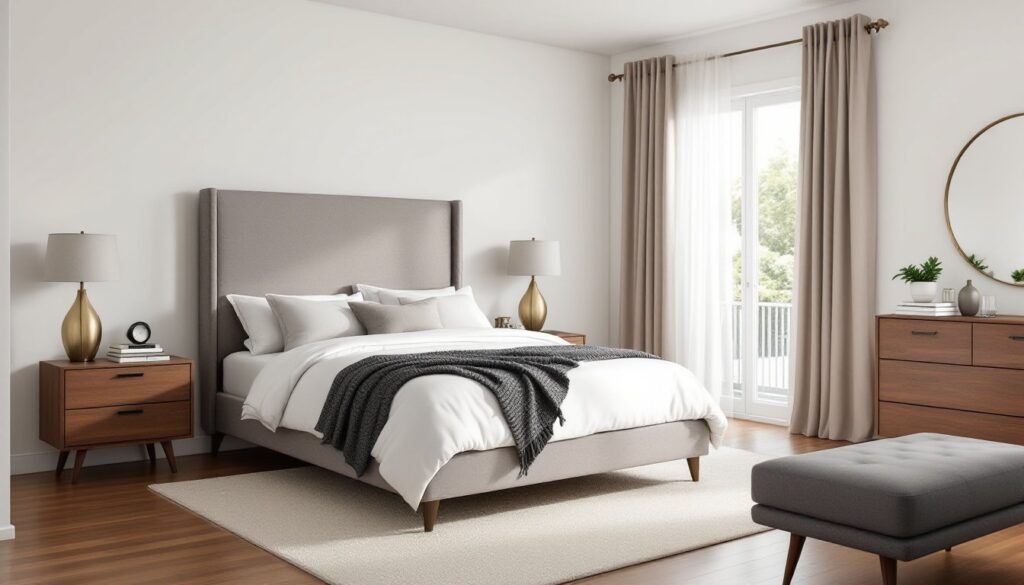
Getting your bedroom furniture layout right is like solving a puzzle, except the pieces are heavy, expensive, and you’re doing it without a picture on the box. Most people shove a bed against a wall, toss in a dresser, and call it done. But a thoughtful layout doesn’t just make your room look better: it improves how you sleep, get dressed, and move through your day. Whether you’re working with a cramped 10×10 box or a sprawling primary suite, the principles stay the same: measure twice, place once, and design for how you actually live.
Table of Contents
ToggleKey Takeaways
- Thoughtful bedroom furniture layout improves sleep quality, daily circulation, and function by following clear spacing standards: 36 inches of walkway clearance around the bed and 24 inches for secondary paths.
- Measure your space and furniture dimensions twice before placing pieces—account for door swings, window placement, and the actual depth of items like nightstands and dressers to avoid costly rearrangement.
- Position your bed on the focal wall or adjacent wall using the feng shui command position (diagonally opposite the door with a solid wall behind the headboard) to reduce anxiety and support better sleep hygiene.
- Avoid common bedroom furniture layout mistakes like blocking electrical outlets, ignoring door swings, overfilling the room, and pushing all furniture against walls—aim for 50–60% of floor space to remain open.
- Choose appropriately scaled furniture for your room size and use vertical storage (wall-mounted shelves) and multi-functional pieces to maximize space, especially in small bedrooms where every square foot counts.
Why Bedroom Furniture Layout Matters for Comfort and Function
A poorly planned bedroom isn’t just an eyesore, it’s a daily frustration. You’re bumping into furniture corners in the dark, struggling to open dresser drawers because the bed’s in the way, or staring at a door that only opens 60% before hitting a nightstand.
Layout affects three critical factors: circulation (how you move through the space), clearance (access to drawers, doors, and closets), and proportion (how furniture scale relates to room size). The standard recommendation is 36 inches of walkway clearance around the bed and at least 24 inches for secondary paths. These aren’t arbitrary, 36 inches allows two people to pass comfortably, while 24 inches is the minimum for one person to navigate without sidestepping.
Good layout also supports better sleep hygiene. A bed positioned with clear sightlines to the door (but not directly in line with it) creates subconscious security, reducing middle-of-the-night anxiety. Avoid placing the bed under windows where drafts, light, and exterior noise disrupt rest. And if you’re storing clothes in the bedroom, furniture placement should allow morning routines to flow without waking a partner, access to dressers and closets shouldn’t require climbing over the bed.
Measure Your Space Before Moving a Single Piece
Guessing dimensions is how you end up with a king-size bed that technically fits but leaves you shuffling sideways to reach the closet. Grab a 25-foot tape measure (the floppy cloth ones don’t cut it for room measuring) and record these dimensions:
- Overall room dimensions: length, width, and ceiling height
- Door swing radius: measure how far each door opens and mark the arc
- Window placement: sill height, width, and distance from adjacent walls
- Obstructions: radiators, vents, electrical outlets, light switches
- Closet door clearance: especially for sliding vs. hinged doors
Sketch a rough floor plan on graph paper using a 1/4-inch = 1-foot scale. Then measure your furniture, actual dimensions, not the “queen bed” label. A queen mattress is 60×80 inches, but the frame adds 2–4 inches per side. A dresser listed as 60 inches wide might have pulls that extend another 2 inches.
Many people skip measuring furniture depth, which is a mistake. A nightstand might be 18 inches deep, but if it sits next to a bed that’s 84 inches long (frame + headboard), you need to account for both when calculating wall space.
Free tools like graph paper and a pencil work fine, but digital options (RoomSketcher, Floorplanner) let you test layouts without hauling furniture. Either way, measure twice. Because moving a solid wood dresser three times to “see how it looks” is nobody’s idea of a good Saturday.
Bed Placement: The Foundation of Your Layout
The bed is the largest piece in the room, so it dictates everything else. Start by identifying the focal wall, typically the wall you see when you enter the room, or the longest uninterrupted wall. In most bedrooms, centering the bed on the focal wall creates visual balance and maximizes symmetry for nightstands.
But centering isn’t a universal rule. If your focal wall has a window, placing the bed underneath blocks natural light and creates a cold draft zone in winter. Instead, position the bed on an adjacent wall where the headboard won’t interfere with window operation or HVAC vents.
Safety and building considerations: Never place a bed directly under a ceiling fan (even with a low-profile blade, you risk a midnight scalping). If you’re in an older home, check for baseboard heaters or radiators, beds need at least 6 inches of clearance to prevent fire hazards and allow heat circulation. And if you’re arranging furniture in a room with sloped ceilings (attics, bonus rooms), make sure there’s at least 36 inches of headroom where you sit up in bed.
For couples, consider access from both sides. Matching nightstands with 24–30 inches of space between the bed and side walls allows comfortable entry and exit. Solo sleepers can cheat one side closer to the wall to gain floor space elsewhere.
Positioning Your Bed for Flow and Feng Shui
Feng shui principles align surprisingly well with ergonomic best practices. The “command position“, placing the bed diagonally opposite the door with a solid wall behind the headboard, offers a clear view of the entrance without being in direct line with it. This setup reduces subconscious stress and improves sleep quality, according to environmental psychology research.
Avoid placing the bed with your feet pointing directly at the door (the “coffin position” in feng shui, and objectively awkward for anyone entering the room). Also skip positioning the headboard on a wall shared with a bathroom, plumbing noise and moisture are poor bedfellows.
In narrow rooms, floating the bed away from the wall by 12–18 inches can create symmetry and allow for a dramatic headboard or room for integrated storage. Just make sure you’re not sacrificing critical circulation space to achieve a magazine-ready look.
Arranging Dressers, Nightstands, and Storage Furniture
Once the bed is placed, layer in storage pieces based on frequency of use and clearance needs. Nightstands should be level with or slightly below the mattress height (24–28 inches for standard beds) so you’re not reaching up or down for your phone, water, or reading light.
Dressers require 36–48 inches of clearance in front to fully open drawers and stand comfortably while dressing. If you’re tight on space, consider a tall chest (5–6 drawers stacked) instead of a wide dresser. A tall chest has a smaller footprint and works well in corners or beside closets, making effective use of essential bedroom pieces.
For homes without walk-in closets, an armoire or wardrobe becomes the primary hanging storage. These are typically 22–24 inches deep and require full door swing clearance, figure 48 inches minimum from the front face. If space is tight, sliding-door armoires or open clothing racks are practical alternatives.
Vertical storage is underutilized in bedrooms. Wall-mounted shelves above dressers or beside windows add display and storage without eating floor space. Just mount them at least 18 inches above any furniture surface to avoid that claustrophobic, crammed-in look.
If you’re working within a unified system of bedroom storage solutions, opt for modular furniture that shares a consistent height and finish. This creates visual cohesion and allows you to rearrange pieces as needs change without the room feeling mismatched.
Layout Solutions for Different Bedroom Shapes and Sizes
Not all bedrooms are tidy rectangles, and cookie-cutter layouts don’t work when you’re dealing with odd dimensions, angled walls, or multiple doors.
Small bedrooms (10×10 to 10×12 feet): Go minimal. A full or queen bed, one nightstand, and a tall dresser are often the practical limit. Skip bulky headboards and opt for wall-mounted reading lights to free up nightstand real estate. Floating shelves above the bed offer storage without consuming floor space. Multi-function pieces, like a storage bench that doubles as seating, are your friend. Design experts at Apartment Therapy frequently showcase how small layouts benefit from furniture that serves more than one purpose.
Long, narrow bedrooms: Place the bed on the short wall to widen the visual footprint. If the bed must go on a long wall, center it and use matching narrow nightstands (12–15 inches deep). A dresser at the foot of the bed can work if there’s 42+ inches of clearance between the bed and dresser for walking.
Large or primary suites (14×16 feet and up): You have flexibility, but avoid the “furniture around the perimeter” trap that makes the room feel like a showroom. Floating the bed away from the wall or adding a seating area (two chairs and a small table) creates zones. A bench at the foot of the bed adds utility without blocking pathways. If space allows, a reading nook by a window, two chairs flanking a small bookcase, adds function and character, as seen in many layouts featured on MyDomaine.
Awkward layouts (angled ceilings, multiple windows, odd alcoves): Use the quirks. An alcove becomes a built-in feel for the bed with flanking nightstands. Under-window walls (36–40 inches high) are ideal for low dressers or benches. Bay windows can host a small vanity or desk. Just ensure you’re not blocking egress windows, bedroom windows must remain operable for emergency exit per IRC code.
Common Layout Mistakes to Avoid
Even experienced DIYers trip over these layout errors.
Blocking electrical outlets: Furniture pushed flush against outlets makes it impossible to plug in lamps, chargers, or fans. Leave at least 2 inches of clearance or use low-profile right-angle plugs. If you’re rearranging frequently, consider having an electrician add outlets on walls where you’ll actually use them, NEC code requires at least one outlet per wall in bedrooms, but older homes often fall short.
Ignoring door swing: A door that hits the dresser or bed frame every time you enter is a daily annoyance. Mark door arcs on your floor plan and keep furniture outside that zone. If the door swing is unavoidable, consider swapping to a pocket door or barn door (verify wall cavity depth first, pocket doors need a 2×4 stud wall minimum).
Overfilling the room: Just because a piece fits doesn’t mean it should be there. A room crammed with furniture feels chaotic, and cleaning becomes a chore. Aim for 50–60% of floor space to remain open. If you’re debating whether a piece is necessary, it probably isn’t.
Forgetting about lighting: Overhead lighting alone creates harsh shadows. Layer in bedside lamps (or wall sconces), a floor lamp in a reading corner, and consider ambient lighting options to adjust brightness for different times of day. Lamps need nearby outlets, so plan furniture placement accordingly.
Mismatched furniture scale: A king bed in a 10×11 room is technically possible but visually overwhelming. Furniture should be proportional to the space, oversized pieces in small rooms feel oppressive, while undersized furniture in large rooms looks lost. When in doubt, tape out furniture dimensions on the floor before buying.
Pushing everything against the walls: This works in kids’ rooms where floor space is for play, but adult bedrooms benefit from layered depth. Pull the bed 12–24 inches off the wall, float a dresser, or angle a chair in a corner. It adds visual interest and makes the room feel designed rather than default, a common theme in well-composed bedroom spaces.
For more community insights and layout troubleshooting from real homeowners, discussion threads like those on Houzz forums offer practical feedback and photos that go beyond stock advice. Real-world layouts often need real-world compromises, seeing how others solved similar challenges can be more useful than idealized room renderings.