When it comes to outfitting a patio, deck, or poolside lounge, aluminum furniture has become the go-to choice for homeowners who want something that looks good, lasts years, and doesn’t demand weekend maintenance sessions. It’s lightweight enough to rearrange without throwing your back out, yet sturdy enough to handle summers of sun, surprise storms, and everything in between. Unlike wood that needs annual sealing or wicker that unravels after a few seasons, aluminum keeps its shape and finish with minimal fussing. Whether someone’s furnishing a small balcony or a sprawling outdoor dining area, understanding what aluminum brings to the table, literally, makes the difference between a setup that works and one that disappoints.
Table of Contents
ToggleKey Takeaways
- Aluminum patio furniture resists rust and corrosion naturally through oxide layer formation, making it ideal for humid climates, coastal areas, and poolside environments.
- Lightweight aluminum frames (8–12 pounds per chair) allow easy rearrangement and require minimal maintenance compared to wood or wicker alternatives.
- Choose aluminum furniture with 1.2mm or thicker wall tubing, welded joints when possible, and powder-coated finishes that last 5–10 years in full sun without significant fading.
- Proper care—weekly hosing, gentle cleaning with soap and water, annual hardware inspection, and off-season storage—extends the lifespan of aluminum outdoor furniture by several seasons.
- Match aluminum finish colors to your home’s exterior (dark bronze for brick, brushed silver for modern styles), layer textures with outdoor rugs and cushions, and incorporate shade structures to maximize both aesthetics and functionality.
Why Choose Aluminum for Your Patio Furniture?
Rust resistance tops the list. Aluminum naturally forms a thin oxide layer when exposed to air, which prevents corrosion, no flaking paint or orange streaks bleeding onto deck boards. This makes it ideal for humid climates, coastal areas with salt air, or poolside setups where chlorine spray is constant.
Weight is another major advantage. A standard aluminum dining chair weighs roughly 8–12 pounds, compared to 20+ pounds for comparable steel or solid wood pieces. That means rearranging seating for a cookout or moving everything ahead of a storm doesn’t require a crew.
Powder-coated finishes provide UV resistance and color variety. The coating is electrostatically applied and baked on, creating a durable shell that resists chipping and fading far better than spray paint. Expect powder coating to hold up 5–10 years in full sun without significant dulling.
Aluminum is also recyclable, and much of the aluminum used in outdoor furniture contains recycled content, usually 30–50%, which appeals to eco-conscious buyers. It doesn’t rot, warp, or attract termites, so there’s no need for chemical treatments or seasonal resealing like teak or cedar require.
Types of Aluminum Patio Furniture to Consider
Dining sets typically include a table with a tempered glass, slatted aluminum, or mesh top, plus four to eight chairs. Look for frames made from extruded aluminum tubing with wall thickness of at least 1.2mm for stability. Chairs often feature sling fabric (vinyl-coated polyester mesh) or cushioned seats.
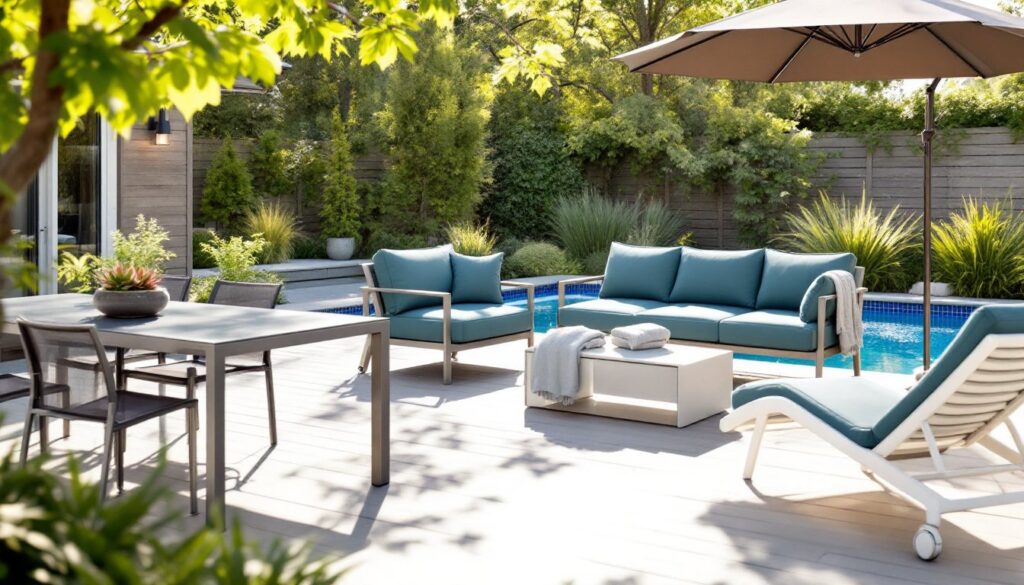
Deep seating collections (sofas, loveseats, club chairs) use thicker tubular frames, often 1.5–2mm wall thickness, and come with weather-resistant cushions. Olefin and Sunbrella fabrics are common choices: both resist UV fade and mildew, but Sunbrella costs more and holds color longer.
Chaise lounges range from simple two-position recliners to multi-position models with wheels. Check for adjustable backs with at least three locking positions and look for non-marring foot caps if the lounge will sit on composite or tile decking.
Bar-height sets work well on smaller patios or balconies. Standard bar height is 40–42 inches: counter height is 34–36 inches. Verify that stools include footrests, standing-height seating without them gets uncomfortable fast.
Modular sectionals let homeowners customize layouts. Pieces connect via hidden clips or simply butt together. When evaluating modulars, check frame alignment, cheap sets have visible gaps or uneven arm heights between sections.
How to Choose the Right Aluminum Patio Furniture for Your Space
Measure the space before shopping. Allow 36 inches of clearance around dining tables so chairs can pull out and people can walk past. For deep seating arrangements, leave 24–30 inches between the sofa and coffee table.
Frame gauge matters. Residential-grade aluminum furniture uses tubing or extrusions ranging from 1.0mm to 2.0mm wall thickness. Anything below 1.2mm feels flimsy and may flex under weight. Commercial-grade pieces often use 2.5mm walls, overkill for most homes but worth it in high-wind zones or for heavy daily use.
Welded vs. bolted construction: Welded joints are stronger and cleaner-looking but can’t be disassembled for storage or transport. Bolted frames allow for flat-pack shipping and easier repairs, though hardware can loosen over time. If bolted, check that fasteners are stainless steel or zinc-plated to prevent corrosion.
Weight capacity isn’t always advertised but matters. A quality dining chair should support 250–300 pounds: deep seating typically handles 300–350 pounds per seat. If specs aren’t listed, sit in the display model and shift your weight, excessive flex or creaking is a red flag.
Consider cushion storage. Even weather-resistant fabrics last longer when stored during prolonged rain or winter. If there’s no indoor or covered storage space, budget for a deck box. Many homeowners find inspiration for organizing outdoor living spaces that balance aesthetics with practical storage solutions.
Maintenance and Care Tips for Aluminum Outdoor Furniture
Routine cleaning: Hose down frames weekly during heavy use to remove pollen, dust, and bird droppings. For deeper cleaning, mix a few drops of dish soap in warm water, scrub with a soft-bristle brush, and rinse. Avoid abrasive pads or cleaners containing chlorine bleach, they can scratch powder coating or dull the finish.
Dealing with oxidation: If white or gray chalky residue appears (common in coastal areas), it’s aluminum oxide. Remove it with a paste of baking soda and water, applied with a soft cloth. Rinse thoroughly and dry. For stubborn spots, automotive aluminum polish works but test in an inconspicuous area first.
Inspect hardware annually. Tighten loose bolts and screws using the correct size wrench or Allen key, over-tightening can strip threads. Replace any rusted fasteners with stainless steel versions from a hardware store.
Cushion care: Brush off dirt before it embeds in fabric. Most outdoor cushion covers are machine washable on gentle cycle: air-dry only, heat can shrink fabric or warp foam inserts. Store cushions in a ventilated deck box or indoors during winter to extend their life by several seasons.
Off-season storage: If storing furniture for winter, clean and dry everything first. Stack chairs to save space, but place cardboard or foam between pieces to prevent scratches. Cover outdoor furniture left in place with breathable covers, not tarps, trapped moisture encourages mildew. Vent covers slightly at the bottom for airflow.
Styling Your Outdoor Space with Aluminum Furniture
Match the finish to your home’s exterior. Dark bronze or matte black aluminum complements brick or stucco: brushed silver or champagne tones pair well with modern siding or coastal color schemes. Powder-coated whites work in cottage or farmhouse-style porches but show pollen and dirt faster in wooded areas.
Layer textures for visual interest. Aluminum’s clean lines benefit from woven outdoor rugs, patterned cushions, or natural-fiber throw pillows. A 5×7-foot or 8×10-foot outdoor rug grounds a seating area and defines zones on larger patios.
Add shade and lighting. Aluminum furniture doesn’t provide built-in shade, so pair dining sets with a 9–11-foot cantilever umbrella or install a pergola with retractable canopy. String lights (LED for longevity) or solar path lights enhance usability after dark without requiring an electrician.
Incorporate greenery. Potted plants soften aluminum’s modern aesthetic. Use galvanized steel, ceramic, or resin planters, avoid unglazed terracotta directly on aluminum tables, as moisture can cause staining. Vertical gardens or trellises add height without eating into floor space on small patios.
Consider traffic flow. Arrange furniture to guide movement, place seating clusters away from grill zones and main pathways. On narrow balconies, bistro sets or folding chairs maximize space without permanent commitment.
Common Mistakes to Avoid When Buying Aluminum Patio Furniture
Ignoring weight and portability needs. Yes, aluminum is light, but ultra-lightweight sets (under 6 pounds per chair) often lack stability in wind. If the patio is exposed, look for heavier-gauge frames or plan to anchor pieces.
Skipping the sit test. Aluminum dining chairs come in a wide range of seat depths, back angles, and arm heights. A chair that looks sleek might be uncomfortable for long dinners. Always test in person or verify return policies for online orders.
Overlooking cushion quality. Cheap foam compresses into flat slabs within a season. Look for high-density polyurethane foam (minimum 1.8 lbs/cubic foot) or quick-dry foam with drainage channels. Cushion thickness should be at least 3–4 inches for seating, 2–3 inches for backs.
Choosing glass tops without considering safety. Tempered glass is standard and shatters into small pebbles rather than shards, but it’s still glass. Households with young kids or active pets might prefer slatted aluminum or mesh tabletops, which also eliminate the need for Windex.
Forgetting about assembly. Many aluminum sets ship flat-pack. Budget 1–3 hours for assembly depending on piece count and your comfort with an Allen wrench or socket set. Some retailers offer white-glove delivery with setup, worth paying for if assembling a large sectional or dealing with stairs.
Not checking warranty terms. Quality manufacturers offer 3–5 years on frames and 1–2 years on finishes and fabrics. Verify what’s covered, some warranties exclude fading, which is often considered normal wear. Keep purchase receipts and register products when required. For those planning larger seasonal home projects, timing furniture purchases around sales events can stretch budgets without sacrificing quality.
Conclusion
Aluminum patio furniture delivers the rare combination of durability, low maintenance, and flexibility that makes outdoor living practical rather than precious. It won’t demand the constant upkeep of wood or the replacement cycle of cheaper resin. By focusing on frame quality, finish durability, and realistic space planning, homeowners can build an outdoor setup that serves summers of meals, lazy afternoons, and evening gatherings without regret or midseason repairs.