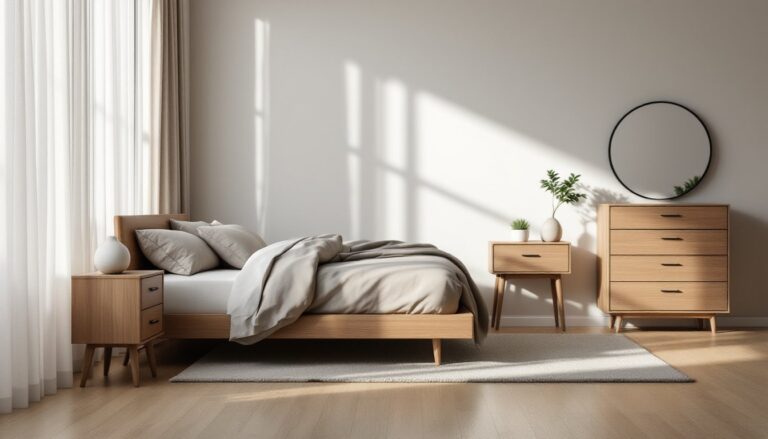
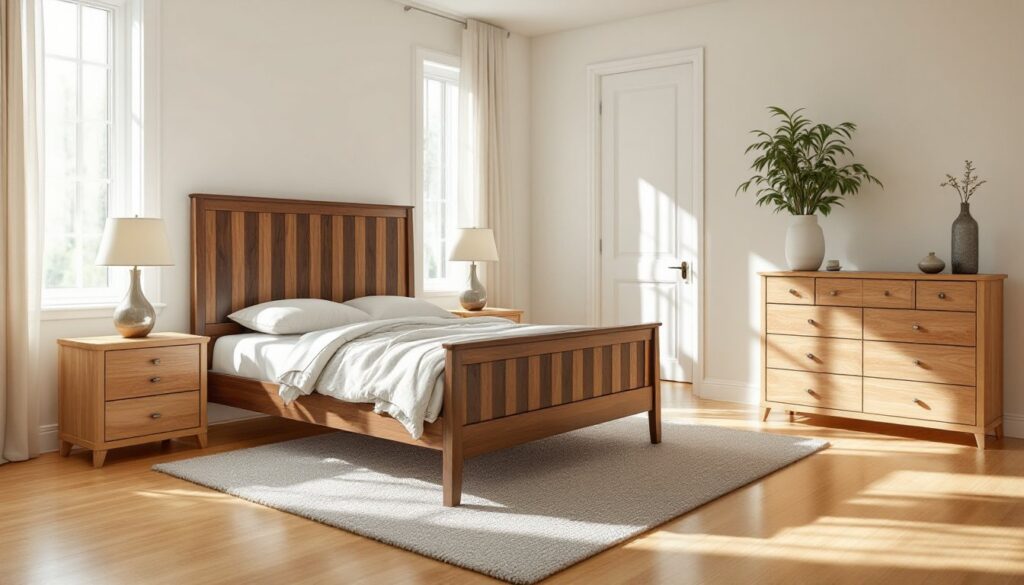
Walk into any bedroom showroom, and you’ll see the same particleboard pretenders wrapped in vinyl veneers. They look fine for six months, then the edges chip and the finish bubbles. Real hardwood furniture costs more upfront, but it’s an investment that outlasts three generations of press-board replacements. Whether you’re furnishing a master suite or outfitting a guest room, understanding hardwood species, construction quality, and proper care will help you choose pieces that age gracefully instead of falling apart. This guide covers what matters: wood selection, sizing considerations, and maintenance that keeps your furniture looking sharp for decades.
Table of Contents
ToggleKey Takeaways
- Hardwood bedroom furniture offers superior durability, repairability, and longevity compared to particleboard and engineered alternatives, making it a multi-generational investment.
- Oak, walnut, maple, and cherry are the most popular hardwood species for bedroom furniture, each with distinct hardness ratings, grain patterns, and price points suited to different design aesthetics.
- Proper construction quality—including dovetail joints, full-extension ball-bearing drawer slides, and mortise-and-tenon bed frame joinery—is essential for hardwood bedroom furniture to perform reliably for decades.
- Maintaining hardwood bedroom furniture involves weekly dusting, humidity control between 35–55%, using coasters and felt pads, and periodic refinishing every 5–10 years to preserve appearance and functionality.
- While hardwood bedroom furniture costs 2–3x more upfront than composite alternatives, the per-year amortized cost favors hardwood over 20+ years, especially when accounting for replacement cycles of cheaper pieces.
Why Choose Hardwood for Your Bedroom Furniture?
Hardwood furniture beats engineered alternatives in three critical areas: structural integrity, repairability, and longevity. Solid hardwood won’t delaminate or swell like MDF when humidity fluctuates. A well-built oak dresser handles decades of drawer cycles without the joints failing, while particleboard pieces start sagging after a few years of use.
Durability is the headline benefit. Hardwood’s density and grain structure resist dents and scratches better than softwoods or composites. Drop a lamp on a pine nightstand and you’ll leave a crater: the same impact on maple might not even mark the finish. This matters in bedrooms where furniture gets daily contact, drawers opened, items set down, bumped during cleaning.
Hardwood also allows for repairs that aren’t possible with veneered pieces. Scratches can be sanded and refinished. Loose joints can be re-glued and clamped. A solid walnut bed frame can be disassembled, moved cross-country, and reassembled without falling apart, unlike cam-lock systems in flat-pack furniture that strip threads on the second assembly.
From a design perspective, hardwood offers grain patterns and color variation that composites can’t replicate convincingly. Even identical species show unique figure, cathedral patterns in quartersawn oak, the dark streaks in walnut heartwood. This natural variation gives each piece character instead of the repetitive uniformity of printed veneers.
Environmentally, solid hardwood from certified sustainable forests (look for FSC or SFI labels) has a smaller footprint than composite boards, which rely on adhesives and petrochemical binders. At end of life, hardwood can be repurposed or recycled without releasing formaldehyde and other VOCs common in engineered products.
The cost argument is real: quality bedroom furniture in hardwood typically runs 2–3x the price of big-box particleboard. But amortized over 20+ years, the per-year cost favors hardwood, especially when you factor in replacement cycles for cheaper alternatives.
Most Popular Types of Hardwood for Bedroom Furniture
Choosing the right species depends on aesthetics, budget, and how the furniture will be used. Each hardwood has distinct characteristics in hardness, grain, and workability that affect both appearance and performance.
Oak: Traditional Strength and Beauty
Red oak and white oak dominate North American furniture manufacturing for good reason. Both species rate around 1,290–1,360 on the Janka hardness scale, making them resistant to denting while still being machinable for joinery. Red oak shows a more pronounced open grain with pinkish-tan color: white oak has tighter grain and gray-brown tones.
Oak takes stain well, though the deep grain can create darker pockets in stained finishes. For a natural look, clear coat or oil finishes highlight the grain without obscuring it. Quartersawn oak, where boards are cut radially from the log, produces distinctive ray fleck patterns prized in Mission and Craftsman-style furniture.
Oak bedroom sets pair well with both traditional and farmhouse design. A solid oak bed frame can handle king-size mattresses without center support if properly constructed with mortise-and-tenon joints. Dressers and nightstands in oak hold up to decades of drawer cycles: dovetailed drawer boxes in oak rarely need repair.
Price-wise, oak sits in the mid-range for domestic hardwoods, typically less expensive than walnut or cherry but costlier than maple. Availability is excellent across North America, which keeps costs reasonable and replacement parts accessible.
Walnut: Rich Tones for Modern Elegance
Black walnut brings deep chocolate-brown heartwood with occasional purple or gray streaks, creating a sophisticated palette that works in contemporary and mid-century modern settings. It’s slightly softer than oak (around 1,010 Janka), but still plenty durable for bedroom furniture that doesn’t take the abuse of dining tables or kitchen islands.
Walnut’s fine, straight grain machines beautifully and takes a satin finish that feels almost velvet-smooth. Unlike oak, walnut doesn’t require staining, most builders prefer clear finishes that deepen the natural color. Over time, walnut can lighten slightly with UV exposure, so expect subtle color shifts near windows.
This species excels in platform beds, where large panels showcase the grain without interruption. Walnut drawer fronts on dressers create clean, continuous surfaces that emphasize form over ornamentation. It pairs well with metal hardware in brushed nickel or matte black.
Expect to pay a premium for walnut, typically 30–50% more than oak for comparable pieces. Domestic black walnut comes primarily from the Eastern U.S., and supply is tighter than oak. Some manufacturers use walnut veneers over hardwood plywood cores to reduce cost while maintaining the appearance: if going this route, verify the core is furniture-grade plywood rather than MDF.
Maple and cherry are also popular alternatives. Maple offers extreme hardness (1,450 Janka) and a pale, uniform grain ideal for painted or light-stained finishes. Cherry starts as light pinkish-tan and ages to a rich reddish-brown, though it darkens unevenly if furniture is partially covered. Both are excellent choices depending on your color and durability priorities. Designers featured in Architectural Digest often highlight walnut and cherry for high-end residential projects due to their natural elegance.
How to Select Hardwood Bedroom Furniture That Fits Your Space
Buying hardwood furniture isn’t just about picking a species and style. Sizing, construction quality, and room layout determine whether a piece works or creates daily frustrations.
Start with accurate room measurements. Measure wall lengths, door swing clearances, and distances between windows and outlets. Sketch a floor plan or use a free room planner app to visualize furniture placement before committing. A king-size bed frame measures roughly 76″ × 80″ plus headboard and footboard extensions: factor in at least 24″ on each side for walking space and nightstands.
Check actual dimensions on furniture listings, manufacturers sometimes list nominal sizes that don’t include crown molding on dressers or finials on bed posts. Measure your doorways and stairwells, too. Solid hardwood pieces don’t disassemble like flat-pack furniture: a seven-drawer dresser might not make the turn at your landing. Some manufacturers offer modular designs that break down for transport.
Inspect construction quality in person if possible. Look for dovetail joints on drawer boxes, interlocking fingers that hold without glue. Drawers should glide on full-extension ball-bearing slides rated for at least 75 lbs, not flimsy side-mount tracks. Flip dressers forward slightly to examine the back panel: it should be solid wood or quality plywood, not thin cardboard stapled in place.
Bed frames require special attention to joinery. Mortise-and-tenon or bed bolt construction provides the strength needed for nightly use. Avoid frames that rely solely on metal brackets: they work loose and squeak. A center support rail is mandatory for queen and king sizes, skip it and the side rails will bow within a year.
For nightstands and dressers, consider drawer depth. Standard dresser drawers run 14″–16″ deep, which fits folded clothes well. Nightstand drawers should be at least 10″ deep to hold books, tablets, and miscellany without items jamming the slide mechanism.
Style consistency matters less than you’d think. Mixing wood tones is acceptable, a walnut bed frame pairs fine with oak nightstands if finishes are similar in sheen (all matte or all satin). Avoid mixing rustic distressed finishes with high-gloss contemporary pieces in the same room.
If you’re choosing flooring materials for the bedroom, consider how hardwood furniture will look against hardwood floors. Too much tonal similarity can make spaces feel flat: area rugs or contrasting trim help define zones.
Budgeting matters, too. A full bedroom set (bed, two nightstands, dresser, and chest) in solid oak from a mid-range manufacturer runs $3,000–$6,000. Walnut pushes that to $4,500–$8,500. Buying pieces individually over time is a valid strategy, start with the bed and nightstands, add storage later. Retailers like those featured in Elle Decor’s wooden bed frame roundup offer starting points for evaluating price-to-quality ratios.
Caring for and Maintaining Your Hardwood Bedroom Furniture
Hardwood furniture requires maintenance, but it’s simpler than most people assume. Regular care prevents damage: neglect accelerates wear.
Dust weekly with a microfiber cloth or furniture duster. Dust is abrasive, dragging it across finishes with a rag causes micro-scratches over time. Vacuum crevices and moldings with a soft brush attachment.
Use coasters and felt pads. Water rings on nightstands happen when condensation from a glass penetrates the finish. Felt pads under lamps and decor prevent scratches from sliding objects. Replace pads annually, grit trapped underneath defeats the purpose.
Clean with appropriate products. For oiled finishes (common on walnut and teak), use a damp, not wet, cloth and mild soap, then re-oil annually with a product like Howard Feed-N-Wax or Danish oil. Poly or lacquer finishes tolerate standard furniture polish: avoid silicone-based sprays that build up and attract dust.
Humidity control is critical. Hardwood expands and contracts with moisture changes. Keep indoor relative humidity between 35–55% year-round. Below 35%, wood shrinks and joints can open: above 55%, panels swell and drawers stick. A whole-house humidifier in winter and a dehumidifier in summer prevent most seasonal issues.
Address scratches promptly. Light surface scratches often disappear with furniture polish or a walnut meat rubbed into the scratch (the oils fill and darken the scratch). Deeper scratches need a touch-up marker matched to the finish, or light sanding and refinishing for severe damage.
Refinishing hardwood furniture is a viable DIY project for those comfortable with sanders and spray equipment. Strip old finish with a chemical stripper or by sanding with 80-grit paper (orbital sander works for flat surfaces: detail work needs hand sanding). Progress through 120-, 180-, and 220-grit, then apply stain if desired and topcoat with poly, lacquer, or oil. Wear respirator masks and eye protection, strippers and finishes release harmful fumes.
Avoid placing furniture in direct sunlight or near heating vents. UV exposure fades finishes unevenly: heat dries wood and can crack finishes. Use window treatments during peak sun hours or reposition furniture annually to even out any color shifts.
For pieces that see heavy use, plan to refresh finishes every 5–10 years. Nightstand tops, dresser tops, and bed rails accumulate wear faster than other surfaces. Spot refinishing is possible on horizontal surfaces, sand, restain, and recoat just the worn area, feathering edges to blend.
When moving hardwood furniture, lift rather than drag. Even felt pads can catch on carpet or floorboards and stress joints. Disassemble bed frames when relocating: reassembling is straightforward if original hardware is bagged and labeled. If you’re coordinating furniture placement with other bedroom essentials, ensure pathways remain clear for cleaning and rearranging.
Proper care extends the life of hardwood bedroom furniture from decades to generations. The same dresser your grandparents bought can serve your grandchildren with periodic refinishing and hardware replacement. That’s the calculus that justifies the upfront investment.
Conclusion
Hardwood bedroom furniture isn’t a decorating trend, it’s a functional choice that outlasts cheaper alternatives while maintaining resale and heirloom value. Choose species based on hardness needs and aesthetic preferences, verify construction quality before buying, and commit to basic maintenance routines. The difference between furniture that lasts twenty years and furniture that lasts two comes down to material selection and care, not luck.