
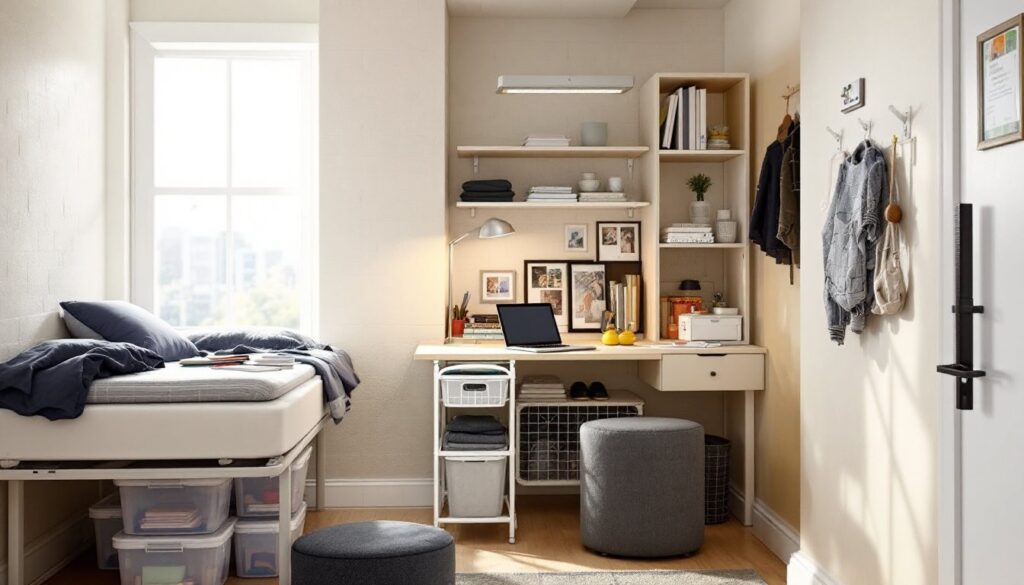
Dorm rooms are notoriously cramped, typically 12′ × 19′ at best, often smaller. That’s roughly 228 square feet shared with another person, their belongings, and all the chaos of college life. The right furniture can transform a cinder-block cell into a functional living space that doesn’t drive you up the wall by midterms. But dorm furniture isn’t just about cramming stuff into tight quarters. It’s about choosing pieces that multitask, fit standard dimensions, survive a few moves, and don’t obliterate a college budget. This guide walks through essential furniture, space-saving strategies, sizing considerations, budget options, and DIY tweaks to make dorm living work.
Table of Contents
ToggleKey Takeaways
- Dorm bedroom furniture must multitask and fit standard dimensions like twin XL beds (39″ × 80″) to maximize limited space in cramped 228-square-foot rooms shared with roommates.
- Essential pieces beyond provided bed frames include mattress toppers, under-bed storage bins, desk lamps, shelving units, and collapsible hampers to create functional dorm bedroom furniture layouts.
- Lofting beds frees 15–20 square feet of floor space, while bed risers, rolling carts, and hanging organizers maximize vertical storage without requiring permanent installation or damage to dorm walls.
- Budget-friendly options like IKEA’s KALLAX shelving ($40) and secondhand furniture from campus move-out sales or Facebook Marketplace can outfit a dorm room for a fraction of retail prices.
- DIY modifications using removable contact paper, adhesive LED strip lights, tension rods, and crate shelving let you personalize dorm furniture without violating no-nail, no-screw policies.
- Avoid overloading electrical outlets and blocking exits; most dorm fires start with overloaded power strips, so use surge protectors with circuit breakers and unplug items when not in use.
Essential Furniture Pieces Every Dorm Room Needs
Most dorms come with a bed frame, desk, and chair, usually institutional-grade steel or particle board that’s seen better decades. The bed is typically a twin XL (39″ × 80″), which is 5″ longer than a standard twin. That means standard twin sheets won’t fit. Plan accordingly.
Beyond what’s bolted down, students need:
- Mattress topper: Dorm mattresses are notoriously thin and uncomfortable. A 2″–3″ memory foam or gel topper makes a huge difference. Look for CertiPUR-US certified foam to avoid off-gassing issues in a small room.
- Storage bins or drawers: Under-bed storage is critical. Measure the clearance between the floor and bed frame before buying bins. Standard dorm bed frames sit 24″–30″ off the floor when lofted, but only 6″–12″ when at standard height.
- Desk lamp: Overhead fluorescents are harsh and often the only lighting provided. A clip-on or adjustable desk lamp with a daylight LED bulb (5000K–6500K) reduces eye strain during late-night study sessions.
- Shelving unit: A small bookcase or cube organizer (3–5 shelves) keeps textbooks, supplies, and personal items off the floor. Freestanding units are preferable, most dorms prohibit wall-mounted shelves that require anchors or screws.
- Laundry hamper: A collapsible fabric hamper or mesh pop-up basket takes up minimal space and can be tucked into a closet or under the desk.
Anything beyond these basics should justify its footprint. A futon might sound appealing, but in a 10′ × 12′ room, it’s usually just an expensive clothes rack.
Space-Saving Furniture Solutions for Small Dorm Rooms
Lofted Beds and Under-Bed Storage Options
Lofting a bed frees up 15–20 square feet of floor space underneath, enough for a seating area, mini-fridge, or second desk. Many dorm bed frames are adjustable with telescoping legs or removable risers. Check with housing services before making changes: some schools require maintenance staff to adjust bed height for safety reasons.
Bed risers are a simpler alternative. Heavy-duty plastic or steel risers add 3″–8″ of clearance, enough to slide flat storage bins underneath. Choose risers rated for at least 1,200 lbs total capacity (300 lbs per riser). Cheaper options crack under weight or shift during the night.
For storage, prioritize wheeled bins or those with cutout handles. Pulling a bin from under a bed in a tight space is easier with mobility. Clear plastic bins let students see contents without unpacking everything.
Safety note: Lofted beds require a guardrail on the open side. Most dorm frames include one, but verify it’s installed correctly. Falls from lofted beds send students to the ER every year, usually during late-night climbs in the dark.
Multi-Functional Furniture That Does Double Duty
Ottoman storage cubes serve as seating, footrests, and hidden storage. A 15″ cube ottoman holds blankets, shoes, or snacks and tucks under a desk when not in use. Look for models with removable lids, not hinged, hinges break quickly with heavy use.
Folding furniture is divisive. A folding chair or lap desk works well for guests or study sessions on the floor. Folding desks or tables, but, are often wobbly and frustrating for regular use. If desk space is limited, a clip-on desk shelf adds a second tier for monitors, books, or supplies without sacrificing legroom.
Rolling carts (think three-tier metal or plastic) are underrated dorm staples. A cart holds toiletries for shared bathroom trips, snack inventory, or craft supplies. It rolls into a closet or beside the bed and costs $20–$40. Many students who embrace the smart bedroom organization strategies find rolling carts indispensable.
Hanging organizers maximize vertical space. Over-the-door shoe racks, jewelry organizers, and closet shelves use space that would otherwise go to waste. Most dorm doors are hollow-core with thin edges, so choose hangers that distribute weight across the top of the door rather than hooks that dent or damage the door edge.
Choosing Furniture That Fits Standard Dorm Room Dimensions
Standard dorm rooms range from 100 to 228 square feet (single to double occupancy). A typical double is 12′ × 19′ with an 8′ ceiling, one window, and a closet barely wide enough for a hanger. Furniture placement is often predetermined by outlet locations, door swing, and roommate negotiation.
Before buying anything, measure the room and sketch a floor plan. Graph paper works, but free apps like RoomSketcher or Floorplanner are faster. Note:
- Door clearance: Entry doors usually swing inward. Leave at least 30″ of clearance so the door doesn’t hit furniture.
- Traffic paths: Maintain a 24″–30″ walkway between furniture. Narrower paths feel claustrophobic and lead to stubbed toes.
- Desk placement: Most dorms have one or two electrical outlets per wall. Desks need to be within 6 feet of an outlet unless you’re running an extension cord (which many schools technically prohibit but everyone does anyway).
When selecting new furniture, dimensions matter:
- Dressers: A standard 3-drawer dresser is 30″–36″ wide and 30″–32″ tall. Anything wider than 36″ struggles to fit between a bed and desk in a double room.
- Nightstands: Compact models 12″–16″ wide fit beside twin XL beds. Taller nightstands (24″–28″ high) align with mattress height when the bed is lofted or raised.
- Seating: Dorm-safe seating like papasan chairs (42″–48″ diameter) or saucer chairs (30″ diameter) sit low and fold or collapse for storage. Avoid bulky recliners or oversized bean bags.
Many pieces that work well in standard bedrooms feel oversized in dorms. A queen-size comforter, for instance, hangs awkwardly off a twin XL bed and bunches up. Measure twice, buy once.
Budget-Friendly Furniture Options for College Students
College budgets are tight. Furniture should be functional, cheap, and disposable (in the sense that it might not survive a fourth move or sublet).
Big-box retailers like Target, Walmart, and IKEA dominate the dorm furniture market. IKEA’s KALLAX series (cube shelving) and MICKE desk are college staples. A 2×2 KALLAX unit runs around $40 and supports bins, books, or décor. The MICKE desk (55″ wide) costs $70–$90 and includes a cable management tray.
Secondhand options save significant money. Check:
- Campus surplus or move-out sales: Many universities hold end-of-year sales where students offload furniture they can’t take home. Prices are negotiable, and some items are free.
- Facebook Marketplace and Craigslist: Filter by location and search “dorm furniture” or “college moving.” Inspect items in person, particle board furniture doesn’t age well, and water damage or broken hardware isn’t always obvious in photos.
- Thrift stores: Goodwill, Salvation Army, and Habitat for Humanity ReStores stock used furniture at low prices. Selection is hit-or-miss, but desks, lamps, and small shelves turn up regularly.
Avoid buying new upholstered furniture (sofas, armchairs) secondhand unless you’re confident it’s bed-bug-free. Inspect seams, zippers, and cushion crevices for small brown or red stains, shed skins, or live bugs. It’s not worth the risk.
Flat-pack furniture is affordable but requires assembly. Have a Phillips-head screwdriver, hammer, and Allen wrenches (usually included) on hand. Assembly goes faster with two people. Don’t overtighten screws in particle board, threads strip easily, and once they’re stripped, the joint is compromised. The community at Apartment Therapy offers countless examples of small-space furniture solutions.
Cardboard furniture has improved. Brands like KarTent and Chairigami make surprisingly sturdy desks, stools, and shelves from corrugated cardboard. A cardboard desk supports up to 200 lbs and costs $30–$50. It won’t last four years, but it’s lightweight, recyclable, and cheap.
DIY Furniture Hacks to Personalize Your Dorm Space
Most dorms prohibit structural modifications, no nails, screws, or paint. That leaves adhesive hooks, removable wallpaper, and furniture modification as the main personalization routes.
Crate shelving is a classic DIY. Wooden crates from craft stores or home improvement centers cost $10–$15 each. Stack them on their sides and secure them with zip ties or corner brackets (if the dorm allows small hardware). Crates create modular shelving that adjusts as needs change. Sand rough edges and apply water-based polyurethane if the wood is unfinished, it reduces splinters and makes the surface easier to clean. The DIY community at IKEA Hackers showcases hundreds of creative furniture modifications.
Fabric and contact paper transform generic furniture. Peel-and-stick contact paper or removable wallpaper can cover particleboard desk surfaces, drawer fronts, or cube organizers. Measure carefully and use a credit card or squeegee to smooth out bubbles as you apply. Fabric works, too, wrap it around cube inserts, storage boxes, or bulletin boards and secure the edges with fabric glue or staples (on the back side).
Lighting upgrades change the vibe without permanent fixtures. LED strip lights (adhesive-backed, USB-powered) mount under desks, behind shelves, or around bed frames. Most strips are dimmable and color-adjustable via remote or app. Battery-powered puck lights stick inside closets or under shelves for task lighting. Always follow dorm fire codes, avoid halogen bulbs, open flames, and anything that generates excessive heat.
Tension rods create storage where none exists. Install a tension rod across a closet opening to hang a fabric curtain, or use multiple rods vertically to create dividers for shoes, bags, or cleaning supplies. Tension rods also work above windows for curtains (if dorms allow window treatments) or inside cabinets to hold spray bottles.
Desk hutches add vertical storage without permanent installation. Build a simple hutch from 1×10 pine boards and small corner brackets. Cut two side pieces (12″–18″ tall) and one or two shelves to the desk width. Assemble with wood glue and 1¼” screws. Sand all edges and finish with paint or stain. The hutch sits on the desk surface, elevating books, supplies, or a monitor to eye level.
Personalization matters, but keep resale or donation in mind. Modifications that can be reversed, paint, heavy adhesive, or permanent hardware, make furniture harder to pass along at year’s end. Stick to changes that peel off, unscrew, or pack away. For more ideas on creating functional personal spaces, check out inspiration from Young House Love, which showcases many budget-friendly projects.
Safety reminder: Don’t block exits, cover smoke detectors, or overload electrical outlets. Most dorm fires start with overloaded power strips or extension cords daisy-chained together. Use a surge protector with a 15-amp circuit breaker and unplug items when not in use.