
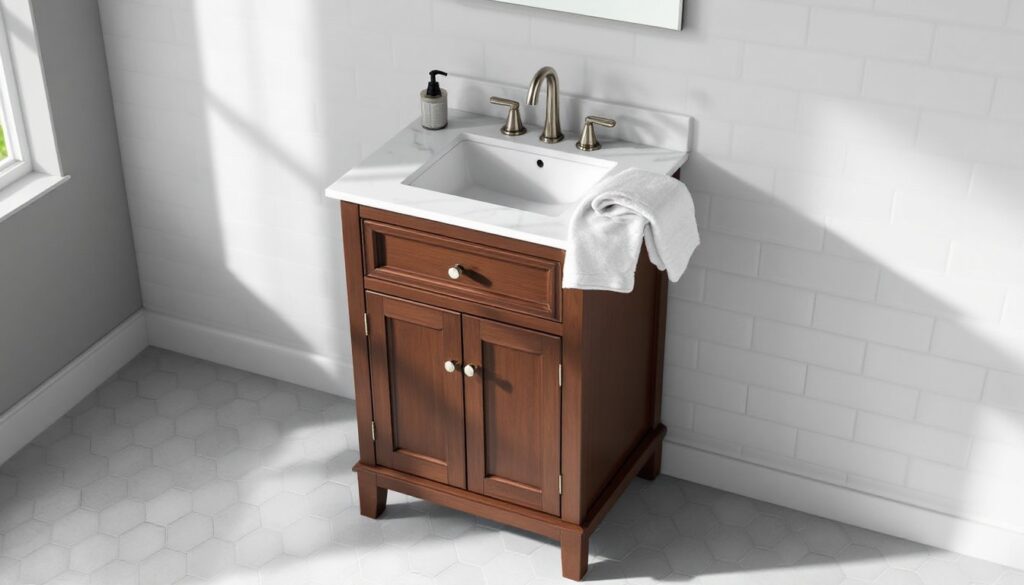
Small bathrooms don’t have to mean sacrificing style or functionality. A 24-inch single vanity strikes the perfect balance for tight spaces, particularly powder rooms, guest baths, or older homes with compact layouts. Legion Furniture has built a reputation for delivering quality vanities that fit these challenging footprints without cutting corners on materials or design. Whether you’re updating a rental property, tackling a half-bath remodel, or working with a vintage home’s original plumbing configuration, understanding what makes a good 24-inch vanity can save headaches during installation and years of frustration afterward.
Table of Contents
ToggleKey Takeaways
- A 24-inch single bathroom vanity set by Legion Furniture strikes the ideal balance for powder rooms, guest baths, and compact spaces while meeting building code clearance requirements without sacrificing storage or style.
- Legion Furniture offers multiple style categories—traditional, modern, and transitional—across their 24-inch vanity collections, with most models arriving as complete packages including pre-attached countertop, sink, and hardware for simplified installation.
- Proper installation of your 24-inch vanity takes 3-5 hours and requires wall mounting to studs, leveling the unit on uneven floors, and following plumbing connections carefully to avoid common mistakes like over-tightening P-trap fittings.
- Material selection matters: engineered quartz countertops resist staining without sealing, while natural stone requires annual maintenance; check whether cabinet side panels are solid wood or veneer, as veneer handles bathroom humidity poorly.
- A well-maintained Legion Furniture vanity lasts 15-20 years with regular care including quarterly plumbing inspections, annual re-caulking, and consistent use of bathroom exhaust fans to reduce humidity and prevent mold or water damage.
Why Choose a 24-Inch Single Vanity for Your Bathroom?
The 24-inch width isn’t arbitrary, it’s the smallest practical footprint for a vanity with an integrated sink and functional counter space. Anything smaller forces compromises like wall-mount sinks with minimal storage or pedestal sinks that leave plumbing exposed.
This size works best in spaces where the vanity wall measures 30 inches or less between adjacent fixtures or walls. Building codes (typically following IRC guidelines) require minimum clearances: 15 inches from the sink centerline to any sidewall and 30 inches of clear floor space in front of the fixture. A 24-inch vanity respects these clearances while maximizing storage.
For powder rooms averaging 20-30 square feet, this vanity size provides a single-basin setup with cabinet or drawer storage below, enough for essentials without overwhelming the room. It’s also ideal for secondary bathrooms in split-level homes, basement conversions, or mother-in-law suites where full double vanities aren’t necessary.
One practical advantage: standard door widths (typically 32-36 inches) accommodate 24-inch vanities easily during delivery and installation. Larger vanities sometimes require removal of door casings or creative maneuvering.
Overview of Legion Furniture Bathroom Vanity Collections
Legion Furniture manufactures vanities across several style categories, each addressing different aesthetic preferences and construction methods. Their 24-inch models typically fall into these lines:
Traditional collections feature solid wood frames (often birch or oak), raised-panel doors, and decorative hardware. These units generally weigh 80-120 pounds without countertops due to plywood case construction and face-frame joinery.
Modern/contemporary lines use smooth-face cabinetry, often with engineered wood cores and veneer or lacquer finishes. Drawer boxes in these models frequently use soft-close hardware and undermount slides, upgrades worth noting during comparison shopping.
Transitional styles blend clean lines with subtle detailing like beveled edges or inset hardware. These tend to be the most flexible for varied decor schemes.
Most Legion Furniture vanity sets arrive as complete packages: cabinet base, pre-attached countertop (usually engineered stone, marble, or ceramic), integrated or vessel sink, and basic hardware. Some models include mirrors or matching medicine cabinets. This bundled approach simplifies purchasing but reduces customization, you can’t easily swap countertop materials without DIY modifications.
Key Features of Legion Furniture 24-Inch Vanity Sets
Construction quality separates temporary fixes from decade-long installations. Legion Furniture 24-inch models typically include:
Solid wood frames with plywood or MDF panels for cabinet boxes. Check if side panels are solid wood or veneer-over-particleboard, the latter handles moisture poorly in high-humidity bathrooms.
Pre-drilled countertops with overflow holes already sized for standard pop-up drains. Faucet holes are usually single-hole (4-inch center) or three-hole (8-inch spread) configurations. Verify your existing plumbing or new faucet specs before ordering.
Soft-close drawer glides and hinges on mid-to-upper-tier models. These European-style hinges (often 110-degree opening) allow full-access cabinet interiors and reduce cabinet door slamming.
Adjustable leveling legs underneath help compensate for uneven bathroom floors, common in homes built before the 1980s. Without these, you’ll fight gaps between the vanity and the wall or floor.
Countertop materials vary: engineered quartz resists staining and requires no sealing: natural marble needs annual sealing but offers unique veining. Ceramic-integrated tops (sink and counter as one piece) eliminate the sink-to-counter seam where grime accumulates but can’t be replaced independently if damaged.
Popular Styles and Finishes Available
Legion Furniture rotates collections seasonally, but common 24-inch finishes include:
- Espresso or dark walnut stains on traditional frames
- White or gray painted finishes (often lacquered MDF for smooth surfaces)
- Natural oak or light wood tones for Scandinavian or farmhouse aesthetics
- Matte black or navy in contemporary lines
Hardware typically comes in brushed nickel, oil-rubbed bronze, or polished chrome. Swapping hardware is straightforward if the mounting hole spacing (usually 3 inches or 96mm center-to-center) matches aftermarket pulls.
When selecting vanity finishes for moisture-prone areas, factory-applied finishes generally outperform DIY paint jobs. Look for water-resistant topcoats or marine-grade finishes on wood surfaces.
Installation Tips for Your 24-Inch Vanity Set
Most DIYers can install a 24-inch vanity in 3-5 hours with basic tools, assuming existing plumbing lines up reasonably well. Here’s what to expect:
Tools needed:
- Adjustable wrench and basin wrench (for tight faucet nuts)
- Level (24-inch minimum)
- Drill/driver with bits
- Silicone caulk and caulk gun
- Tape measure
- Safety glasses
Prep work:
- Shut off water supply at the angle stops (those oval knobs under the old vanity).
- Disconnect P-trap and supply lines. Have a bucket ready, residual water will drain.
- Remove the old vanity. Check for water damage on the wall or floor. Replace any spongy drywall or subflooring before installing the new unit.
- Locate studs behind the vanity area. The vanity’s mounting rail should hit at least one stud: use 2.5-inch wood screws through the rail into studs for secure attachment.
Installation steps:
- Slide the vanity into position. Use shims under the base if the floor isn’t level, get the top surface level first, then secure.
- Attach the vanity to the wall through the mounting rail or cleat. Some models have a French cleat system: others use a simple nailing strip at the back.
- Connect the faucet to the countertop before final positioning if access is tight. Hand-tighten mounting nuts, then a quarter-turn with a basin wrench.
- Hook up supply lines (braided stainless are more reliable than plastic) and P-trap. Use plumber’s tape on threaded connections to prevent leaks.
- Turn water back on slowly. Check all connections for drips. Tighten as needed but don’t over-torque, you’ll crack fittings.
- Run a bead of silicone caulk along the vanity’s back edge where it meets the wall and along the bottom edge if it contacts the floor. Tool the caulk smooth within 5 minutes before it skins over.
Common mistakes:
- Skipping the level check. A tilted vanity leads to standing water on the countertop and premature seal failures.
- Over-tightening P-trap slip nuts. Plastic threads strip easily: snug is enough.
- Forgetting to test the pop-up drain assembly before final installation. Those linkage rods are finicky.
If your existing plumbing doesn’t align with the new vanity’s drain location (more than 2 inches off-center), you may need a plumber to relocate the drain stub-out. That’s not a DIY job unless you’re comfortable sweating copper or working with PVC under a slab.
Matching Your Vanity with Bathroom Decor and Design
A 24-inch vanity occupies roughly 4 square feet of floor space, enough to anchor a small bathroom’s aesthetic but not dominate it. Balance is key.
Scale and proportion matter. In a powder room with an 8-foot ceiling, a vanity with a tall mirror or medicine cabinet can make the space feel taller. Conversely, a low-profile vanity with a horizontal mirror suits bathrooms with awkward window placements or low ceilings.
Hardware coordination ties the room together. If your towel bars and shower fixtures are brushed nickel, carrying that finish to vanity pulls and faucets creates visual cohesion. Mixing metals intentionally (like matte black faucets with brass cabinet pulls) works if you repeat the combination elsewhere, say, in light fixtures.
Color temperature affects how finishes read. Espresso vanities look rich under warm LED lighting (2700-3000K) but can appear muddy under cool daylight bulbs (5000K+). White vanities forgive a wider range but show wear faster in high-traffic bathrooms.
For design inspiration, browsing curated bathroom galleries helps identify how different vanity styles interact with tile choices, wall colors, and lighting. Many homeowners find that professional remodel portfolios clarify which combinations hold up visually over time versus trendy looks that date quickly.
Flooring interactions: A floating vanity (wall-mounted without legs touching the floor) pairs well with large-format tile since the uninterrupted floor plane makes the room feel larger. Traditional vanities with a furniture-style base suit patterned tile or luxury vinyl plank that benefits from visual breaks.
Maintenance and Care for Long-Lasting Performance
A well-maintained vanity lasts 15-20 years in typical residential use. Neglect cuts that lifespan in half.
Daily care:
- Wipe down the countertop after use to prevent water spots (especially on natural stone).
- Keep the area under the sink dry. Even small leaks from supply lines or P-traps cause cabinet deterioration. Check connections quarterly.
Monthly tasks:
- Clean cabinet exteriors with a damp cloth and mild detergent. Avoid abrasive cleaners on painted or lacquered finishes, they dull the surface.
- Inspect soft-close hardware. If drawers or doors slam, the hydraulic dampers may need adjustment (usually a small screw on the hinge or slide).
- Run water through the sink for 30 seconds to flush the P-trap if the bathroom sees infrequent use. Traps can dry out and allow sewer gases into the room.
Annual maintenance:
- Tighten faucet mounting nuts and supply line connections. Vibration from daily use loosens them over time.
- Re-caulk the vanity’s wall and floor joints if the old caulk cracks or pulls away. Remove old caulk completely before applying new, layering causes adhesion failures.
- Check for signs of water damage: soft spots in the cabinet floor, musty odors, or discoloration on adjacent walls. Catch these early before mold establishes.
Finish-specific care:
- Natural stone countertops (marble, granite) need annual sealing. Test by dripping water on the surface, if it beads up, the seal is good. If it darkens the stone, reseal.
- Engineered quartz requires no sealing but can stain from certain chemicals (nail polish remover, bleach). Wipe spills immediately.
- Wood finishes benefit from occasional furniture polish to maintain luster, but avoid silicone-based products near the sink, they create slip hazards.
Hardware longevity: Cabinet hinges and drawer slides have finite lifespans. If you notice sagging doors or sticky drawers after a decade, replacement hardware (matched to the original mounting holes) runs $20-40 and installs in minutes.
Bathroom ventilation extends vanity life significantly. Run the exhaust fan during showers and for 20 minutes afterward to reduce humidity. Persistent moisture warps wood, loosens veneer, and accelerates finish breakdown regardless of quality.