Living in a small apartment doesn’t mean settling for cramped, cluttered chaos. With the right furniture choices, even a 400-square-foot studio can feel open, organized, and fully functional. The key isn’t about buying less, it’s about buying smarter. This means choosing pieces that serve multiple purposes, fit the scale of the room, and capitalize on every inch of vertical and horizontal real estate. Whether you’re downsizing, renting your first place, or just tired of bumping into your coffee table, these furniture strategies will help you reclaim space without sacrificing style or comfort.
Table of Contents
ToggleKey Takeaways
- Multi-functional furniture like sofa beds, storage ottomans, and fold-down desks maximizes utility in small apartments by serving multiple purposes in a single footprint.
- Vertical storage solutions—including ceiling-height bookcases, wall-mounted shelving, and loft beds—free up valuable floor space while capitalizing on unused wall space.
- Choosing appropriately scaled furniture with low-profile designs and transparent materials creates visual openness and prevents small apartment spaces from feeling cramped or cluttered.
- Strategic placement like floating sofas, open-backed bookcases as dividers, and zoning with rugs transforms undefined open-plan layouts into functional, separate living areas.
- Built-in storage furniture such as platform beds with drawers, lift-top coffee tables, and media consoles with cabinets keeps clutter hidden while maintaining accessibility in tight quarters.
Choose Multi-Functional Furniture That Works Harder
In tight quarters, every piece needs to earn its footprint. Multi-functional furniture delivers two or more uses in the same real estate, turning a sofa into a guest bed or a coffee table into a dining surface.
Sofa beds and sleeper sofas are the workhorses of small apartments. Modern designs have moved beyond lumpy mattresses and metal bars: look for options with memory foam or innerspring mechanisms that actually support overnight guests. Pay attention to the clearance needed to pull out the bed, most require 30–36 inches in front.
Storage ottomans double as footrests, extra seating, and hidden bins for blankets or books. Choose firm-topped versions that won’t sag under weight if you plan to use them as coffee tables.
Drop-leaf tables and extendable dining tables let you scale seating up or down. A table that seats two for weeknight dinners can expand to accommodate six when friends visit. Wall-mounted fold-down desks disappear entirely when not in use, freeing up floor space for yoga or pacing while on hold with your landlord.
When shopping, test the transformation mechanism in person. Hinges, slides, and latches take daily abuse in small spaces, flimsy hardware will fail within months.
Embrace Vertical Storage Solutions
Most renters and homeowners focus on floor space and ignore the real opportunity: walls and vertical volume. Tall, narrow furniture pushes storage upward, leaving more room to move at eye level.
Bookcases that reach the ceiling make use of dead air. Anchor tall units to wall studs with L-brackets to prevent tip-over, especially critical if you live in an earthquake zone or have kids. Use the top shelves for seasonal items or things you rarely access.
Wall-mounted shelving eliminates the need for bulky bookcases altogether. Floating shelves work well for display, but if you’re storing anything heavy (textbooks, vinyl records), use shelves with concealed brackets rated for the load. Expect most drywall anchors to hold 20–50 pounds depending on type: toggle bolts and mounting into studs provide the best support.
Loft beds free up the entire footprint underneath for a desk, seating area, or closet. Standard loft kits raise the mattress 60–72 inches off the floor, leaving roughly 4–5 feet of usable height below. If you’re building custom, confirm ceiling height, most building codes require at least 7 feet of clearance in habitable rooms, and you’ll want space to sit up in bed.
Tall dressers (five or six drawers high) store more than wide, squat models. Pair them with wall hooks or pegboard systems for bags, hats, and accessories that don’t need drawers.
Select Furniture with the Right Scale and Proportions
Oversized furniture in a small apartment feels like wearing someone else’s shoes, it just doesn’t fit. Scale matters as much as style.
Measure your room before you shop, and bring a tape measure to the store. A sofa that looks modest in a showroom with 14-foot ceilings can dominate a 10×12 living room. Standard sofas run 84–96 inches long: apartment-sized models are typically 68–80 inches and better suited to tight spaces.
Leave at least 18–24 inches of clearance between furniture and walls or other pieces for comfortable passage. In a studio, this often means choosing a loveseat over a full sofa, or skipping the coffee table entirely in favor of nesting side tables.
Armless chairs and settees take up less visual and physical space than upholstered club chairs. They’re easier to tuck under tables or slide into corners when not in use.
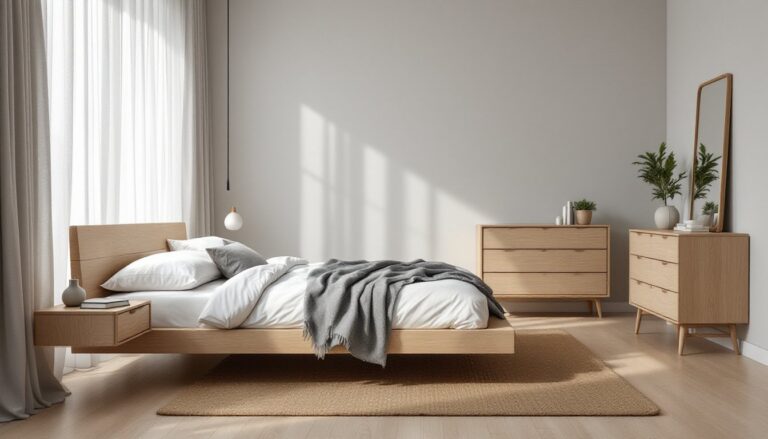
Low-profile furniture, platform beds, low-back sofas, benches instead of dining chairs with tall backs, keeps sightlines open and prevents the room from feeling boxed in. This trick is widely used in modern compact interiors to maintain a sense of airiness even when floor space is limited.
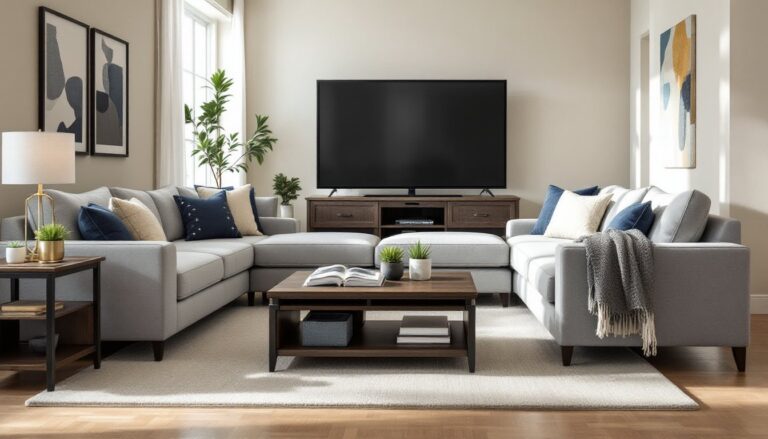
Avoid sectionals unless your apartment has an actual defined living area. They’re hard to reconfigure and often too large to move through narrow hallways or staircases during a future move.
Opt for Transparent and Lightweight Materials
Visual weight matters as much as physical bulk. Furniture made from transparent or reflective materials takes up less perceptual space, making the room feel larger.
Acrylic (lucite) furniture, chairs, side tables, even desks, virtually disappears. It’s durable, easy to clean, and works in nearly any decor style. Expect to pay more than wood or metal equivalents, but the spatial payoff is real.
Glass tabletops on metal or wood bases let you see through to the floor, reducing visual clutter. Tempered glass is the standard for furniture: it’s heat-treated for strength and shatters into small, blunt pieces instead of sharp shards if broken. For dining tables, look for at least ½-inch thickness to support plates and elbows without flexing.
Metal frames, especially in matte black, brushed nickel, or thin-profile steel, offer structural support without the heft of solid wood. Hairpin legs, wire shelving, and open metalwork give furniture a floating appearance.
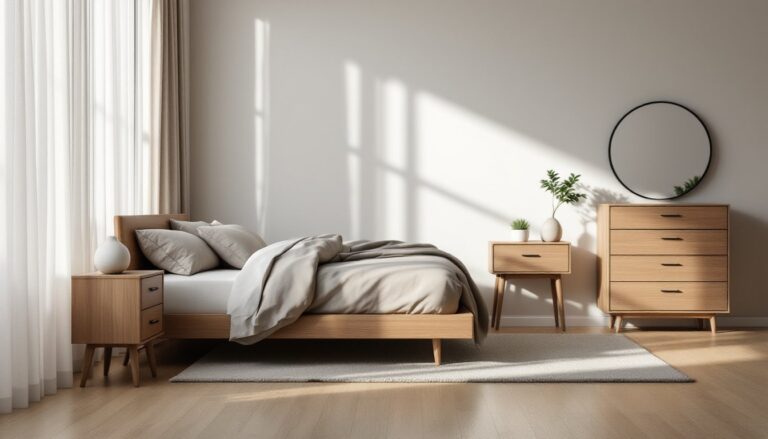
Light-colored wood finishes (birch, ash, light oak) reflect more light than dark walnut or espresso stains. If you love dark wood, save it for accent pieces rather than large items like beds or wardrobes.
Be realistic about wear. Acrylic scratches more easily than wood, and glass shows fingerprints. If you have pets or young kids, balance aesthetics with durability.
Create Zones with Strategic Furniture Placement
Small apartments often lack physical walls to separate living, sleeping, and working areas. Furniture can do the job instead.
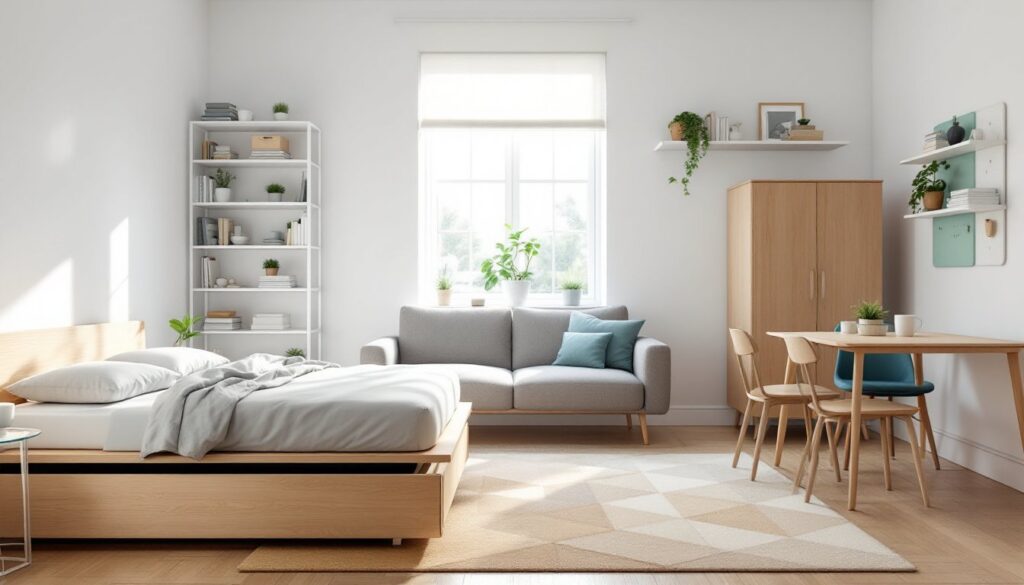
Bookcases as room dividers define zones without blocking light or airflow. Place a tall, open-backed unit perpendicular to a wall to separate the bed from the living area in a studio. The shelves remain accessible from both sides.
Sofas and rugs anchor seating areas. In an open-plan space, floating a sofa a few feet off the wall (back facing the dining or kitchen area) signals a clear boundary. Pair it with an area rug sized to fit all front furniture legs, typically 5×7 or 8×10 feet depending on the room.
Benches and console tables behind a sofa add surface area for lamps, books, or drinks without taking up extra floor space. A narrow console (10–14 inches deep) can also serve as a workspace or entryway drop zone.
Curtains or folding screens offer flexible division when furniture alone isn’t enough. Ceiling-mounted curtain tracks let you pull fabric across a room to hide a bed or home office after hours, then draw it back to reclaim space.
Avoid pushing all furniture against walls. In very small rooms, that can make the center feel like a bowling alley. Grouping pieces into clusters creates intimacy and function. Many furniture arrangement hacks rely on modular systems that adapt as your needs shift.
Invest in Smart Storage Furniture
Clutter is the enemy of small-space living. Furniture with built-in storage keeps everyday items accessible but out of sight.
Platform beds with drawers use the void beneath the mattress for linens, off-season clothing, or shoes. Look for models with full-extension drawer slides (ball-bearing or soft-close) so you can actually reach items in the back. Standard under-bed drawers are 12–16 inches deep.
Storage benches at the foot of the bed or in an entryway hold bags, shoes, or gym gear. Hinged-top versions with safety stays prevent the lid from slamming on fingers.
Lift-top coffee tables reveal hidden compartments for remotes, magazines, and laptops. The top surface raises to dining or desk height, letting you work or eat from the sofa. Lifting mechanisms vary in quality, test them in person or read reviews carefully.
Wardrobes and armoires replace or supplement tiny closets. If your apartment lacks a coat closet or linen storage, a freestanding wardrobe can be a lifesaver. Choose one with adjustable shelves and a hanging rod to customize the interior layout.
Media consoles with cabinets hide electronics, cables, and gaming gear. Measure your TV width and confirm the console is at least a few inches wider for visual balance. Cable management cutouts in the back panel keep cords tidy.
Remember to use every nook: the space above the refrigerator, inside cabinet doors (hooks or magnetic strips), and even the back of the bathroom door. Designers covering space-saving interiors emphasize that storage should be invisible but always within arm’s reach.
Conclusion
Furnishing a small apartment is less about deprivation and more about precision. Multi-functional pieces, vertical storage, proper scale, and smart placement transform tight quarters into efficient, comfortable homes. Measure twice, choose furniture that works overtime, and don’t be afraid to edit ruthlessly. The best small-space setups aren’t the ones crammed with clever hacks, they’re the ones where every item has a clear purpose and nothing feels like an afterthought.