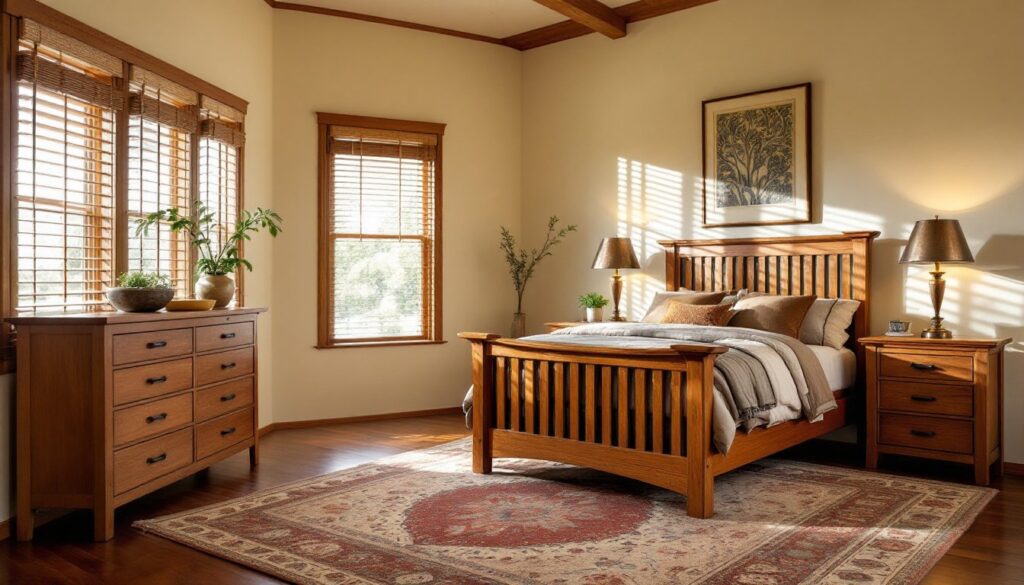
If you’re drawn to clean lines, honest joinery, and furniture that feels like it’ll outlast your mortgage, Mission style might be your match. Born from the American Arts and Crafts movement in the late 1800s, this design philosophy rejected the fussy ornamentation of Victorian excess in favor of functional beauty. Mission bedroom furniture carries that legacy forward, solid, square, and built to last. It’s not minimalist, but it’s definitely not cluttered. Think quartersawn oak, visible mortise-and-tenon joints, and a presence that anchors a room without shouting for attention.
Table of Contents
ToggleKey Takeaways
- Mission bedroom furniture prioritizes honest construction, solid materials like quartersawn oak, and visible joinery as design elements—a legacy of the early 1900s Arts and Crafts movement that rejects unnecessary ornamentation.
- Quality Mission pieces feature rectilinear frames, exposed mortise-and-tenon joints, and panel-and-frame construction that prevents warping by allowing wood to expand and contract naturally with humidity.
- Quartersawn white oak is the traditional choice for Mission furniture due to its distinctive ray fleck figure and superior dimensional stability, though cherry and walnut offer contemporary alternatives at varying price points.
- A complete Mission bedroom setup should include a substantial bed frame with slatted headboard, a dresser with dovetailed drawers, nightstands (24–28 inches tall), and optional armoires or benches—with 24–36 inches of clearance around the bed for movement.
- Style a Mission bedroom with an earth-toned palette, simple textiles, minimal lighting with oil-rubbed bronze or hammered copper finishes, and functional window treatments that avoid ornate details and maintain the furniture’s streamlined aesthetic.
- Purchase options range from heritage brands like Stickley Furniture ($3,000–$8,000+ for quality pieces) to budget alternatives on Wayfair and Amazon ($600–$1,500), vintage estate finds, or DIY builds that balance cost with craftsmanship.
What Is Mission Style Bedroom Furniture?
Mission style bedroom furniture grew out of the Arts and Crafts movement championed by Gustav Stickley and others around 1900. The name comes from the Spanish missions of California, whose simple, sturdy furnishings inspired early designers. But this isn’t about historical cosplay, it’s about a design language that prioritizes honest construction and natural materials.
You’ll recognize Mission pieces by their rectilinear frames, straight vertical and horizontal slats, and exposed joinery. Unlike mass-produced furniture that hides its assembly with veneers and hardware, Mission construction celebrates the mortise-and-tenon joint. Dowels, through-tenons, and keys are often left visible as design elements.
The style leans heavily on quartersawn white oak, chosen for its distinctive ray fleck figure and dimensional stability. That’s not just aesthetic, quartersawn lumber expands and contracts less with humidity changes, which matters when you’re building solid-wood case goods with panel-and-frame construction. Other hardwoods like cherry or walnut appear in contemporary versions, but oak remains the traditional choice.
Mission furniture avoids applied ornamentation. No carved scrollwork, no inlay, no gilding. The beauty comes from proportion, grain, and joinery. If you’re tired of particle board with a photo-printed “wood grain,” Mission style is the antidote.
Key Characteristics of Mission Bedroom Furniture
Straight lines and right angles define the silhouette. Bed frames feature thick, square posts, often 4×4 or larger nominal sizing, with horizontal slats on the headboard and footboard. No curves, no cabriole legs, no fuss.
Exposed joinery is a signature. Through-tenons (where the tenon passes completely through the mortise and is visible on the other side) are wedged or keyed for visual and structural effect. You’ll also see wooden pins and pegs instead of hidden screws. This approach requires precision, gaps and misalignment show, so quality Mission pieces are tight and square.
Flat or slightly tapered legs taper from top to bottom on some pieces, but the taper is subtle. Table and chair legs might narrow by a quarter-inch per side from top to bottom, just enough to add visual lightness without compromising stability.
Panel-and-frame construction on case goods (dressers, nightstands, armoires). Solid-wood frames surround floating panels that can expand and contract with seasonal humidity. This prevents cracking and warping, a detail that matters if you live anywhere with actual seasons.
Hardware is minimal and functional. Drawer pulls are often hammered copper or iron, simple and sturdy. Hinges may be visible strap hinges or mortised butt hinges, nothing ornate. The woodworking plans at Ana White often feature similar hardware choices for DIY Craftsman-style projects.
Finishes tend toward medium to dark stains that enhance the oak’s ray fleck without obscuring the grain. Fumed oak (ammonia-darkened) was traditional but less common today due to fume handling. Modern Mission furniture uses penetrating oil or catalyzed varnish for durability.
Essential Mission Bedroom Furniture Pieces for Your Space
Start with a Mission-style bed frame. Platform beds with slatted headboards and low-profile footboards are common. Queen and king frames typically use 2×6 or 2×8 slats spaced 3–4 inches apart for mattress support, check your mattress warranty, as some require closer spacing or a solid foundation. Posts are usually 5–7 inches square (actual dimensions after milling), giving the frame substantial visual weight.
A dresser or chest of drawers provides essential storage. Look for dovetailed drawer boxes, traditional Mission construction uses hand-cut or machine-cut dovetails at drawer corners, not just stapled boxes. Drawers should ride on wooden runners or quality undermount slides. Cheaper versions substitute side-mounted metal slides, which work but aren’t period-correct.
Nightstands in Mission style often feature a single drawer over an open shelf or cabinet. Standard height is 24–28 inches to align with typical mattress height (including foundation). Depth runs 16–18 inches, enough for a lamp, book, and phone without crowding a bedside.
Armoires or wardrobes fit rooms without built-in closets or when you need supplemental hanging space. Full-height Mission armoires can weigh 200+ pounds unloaded and may require anchoring to wall studs to meet current ASTM F2057 tip-over standards, especially if you have kids. Use appropriate toggle bolts or lag screws into studs, drywall anchors alone won’t cut it.
If space allows, a Mission-style bench or blanket chest at the foot of the bed adds both seating and storage. Cedar-lined chests are traditional for linens and off-season clothing, though cedar’s moth-repellent properties are mild, it’s not a substitute for proper cleaning and storage prep.
When planning your bedroom furniture layout, ensure you have 24–36 inches of clearance around the bed for comfortable movement and making the bed.
Choosing the Right Wood and Finish
Quartersawn white oak remains the gold standard. Quartersawing yields boards with vertical grain and the characteristic “ray fleck” figure, silvery ribbons that catch light. This cut is more labor-intensive and produces more waste than plain-sawn lumber, so it costs 25–40% more. But the stability and appearance justify the premium for heirloom-quality furniture.
Red oak is a budget alternative with a coarser grain and less prominent ray fleck. It stains similarly to white oak but lacks the same visual depth. If you’re building your own pieces, red oak is more widely available at home centers in standard dimensions.
Cherry offers a warm, reddish tone that deepens with age and UV exposure. It’s softer than oak (Janka hardness ~995 vs. ~1,360 for white oak) and dings more easily, but it takes stain and oil finishes beautifully. Cherry works well for lighter bedroom styles that still want Craftsman joinery and proportions.
Walnut is pricier, expect 50–75% more than oak, but its chocolate-brown heartwood needs minimal stain. Walnut Mission furniture skews contemporary while maintaining traditional construction.
For finishes, penetrating oils like tung oil or Danish oil build slowly (3–5 coats) but are easy to repair and maintain. They leave the wood feeling natural, not plastic. Catalyzed varnish or conversion varnish offers better moisture and scratch resistance for high-use surfaces like dresser tops. These are two-part finishes that cure chemically, more durable than simple polyurethane but require careful mixing and application.
Avoid thick, glossy poly that sits on the surface. Mission style calls for satin or matte sheens that enhance the wood without making it look wet. If you’re refinishing, start with 120-grit sandpaper and work up to 220-grit before applying finish, anything finer closes the grain and reduces stain absorption.
How to Style a Mission Style Bedroom
Keep the color palette earth-toned and muted. Think warm browns, deep greens, rust, mustard, and cream. Mission style pairs naturally with Arts and Crafts textiles, geometric patterns, stylized florals, and woven textures. William Morris prints are period-appropriate but can feel busy: simpler linen or cotton bedding in solid colors or subtle patterns balances the visual weight of the furniture.
Lighting matters. Mica or stained-glass pendant lights and table lamps with simple shades fit the aesthetic. Avoid ornate chandeliers or ultra-modern fixtures, stick with metal finishes like oil-rubbed bronze, hammered copper, or brushed nickel. Swing-arm wall lamps with fabric shades work well as bedside reading lights and free up nightstand space.
Window treatments should be functional and unfussy. Wooden blinds, simple curtain panels on wooden or wrought-iron rods, or Roman shades in natural fabrics all work. Skip the valances and swags, they clash with Mission’s streamlined approach.
For wall decor, framed prints with simple wood frames or metal frames align with the style. Arts and Crafts-era artists (like Maxfield Parrish or Yoshida Hiroshi’s woodblock prints) fit thematically. Keep arrangements symmetrical or grid-based rather than salon-style clusters.
Rugs should anchor the bed without overwhelming it. Wool or jute area rugs in geometric or stylized patterns complement the furniture. Size the rug so at least the front legs of nightstands sit on it, creating a visual zone. An 8×10 or 9×12 rug works for most queen and king bed setups with nightstands.
Don’t overload the room. Mission style relies on negative space and restraint. Each piece should have breathing room. If you’re pulling inspiration from country-style interiors or other rustic aesthetics, adapt rather than mix styles directly, Mission furniture doesn’t need farmhouse signs or shabby-chic accessories.
Where to Buy Mission Bedroom Furniture in 2026
Stickley Furniture remains the heritage brand, producing high-end Mission reproductions and contemporary pieces in the Craftsman tradition. Expect to pay $3,000–$8,000+ for a queen bed frame, more for case goods. Quality is exceptional, with traditional joinery and solid quartersawn oak.
Amish furniture makers offer custom Mission pieces at mid-to-high price points. Brands like Deutsch Furniture or direct-order operations in Ohio and Pennsylvania build to order with your choice of wood, stain, and dimensions. Lead times run 10–16 weeks, but you get exactly what you spec. Pricing is transparent, most provide quotes based on wood species and complexity.
Bassett Furniture and Ethan Allen carry Mission-inspired collections at more accessible price points ($1,500–$4,000 for beds). These often mix solid wood with veneered panels and may use mortise-and-tenon joinery for visible elements while relying on dowels or brackets internally. Quality varies by line, inspect joinery and drawer construction before buying.
Online retailers like Wayfair, Overstock, and Amazon sell budget Mission-style furniture ($600–$1,500 for beds). Much of this is imported, often using rubberwood or oak veneers over engineered wood cores. It looks the part from across the room but won’t have the heft, joinery, or longevity of solid hardwood construction. If budget is tight, prioritize the bed frame and buy one quality case piece rather than a full set of lower-quality furniture.
Estate sales, auctions, and vintage shops are goldmines for original Stickley, Limbert, or Roycroft pieces from the early 20th century. Authentic antiques command premium prices ($5,000+ for beds in good condition), but you’ll also find mid-century and 1980s–90s reproductions at reasonable cost. Check for structural soundness, original pieces may need re-gluing or refinishing. Avoid pieces with extensive veneer damage or missing joinery elements unless you’re prepared for restoration work.
For DIYers, plans and kits are available through woodworking sites and magazines. A basic Mission-style bed frame requires intermediate woodworking skills, a table saw or circular saw, drill/driver, and chisels for mortises. Budget $300–$600 in lumber and hardware for a queen frame in red oak, more for quartersawn white oak. When choosing bedroom essentials, consider mixing one or two DIY builds with purchased pieces to manage cost.
Conclusion
Mission bedroom furniture isn’t a passing trend, it’s a design language rooted in craft and honest materials. Whether you invest in heirloom-quality pieces, hunt for vintage finds, or build your own, you’re choosing furniture that respects both the wood and the joinery. It anchors a room without fuss and ages gracefully when you treat it right. Just remember to leave breathing room, keep the styling restrained, and let the furniture do the talking.