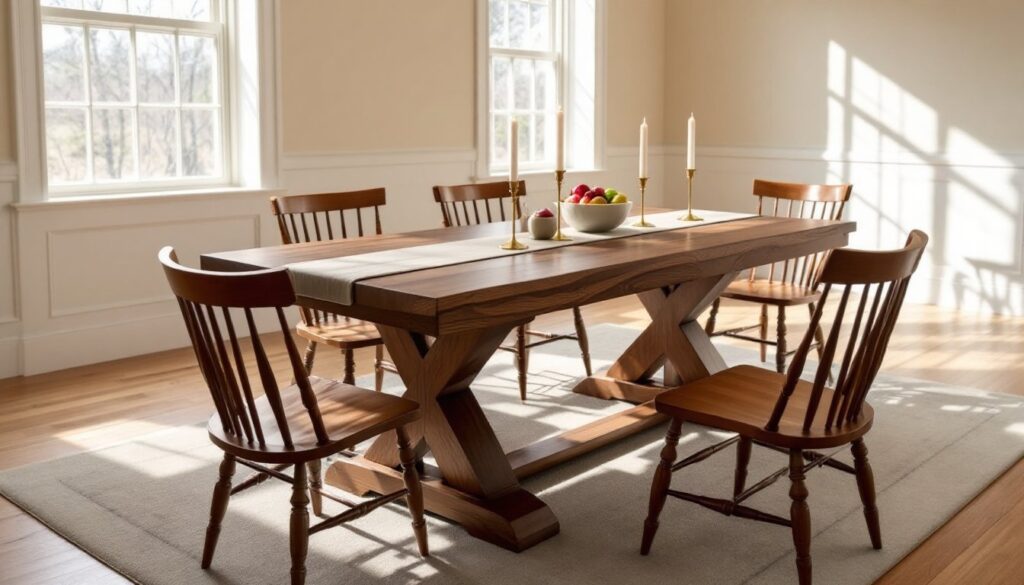
Solid wood dining room furniture stands apart from veneer and composite alternatives in ways that matter: structural integrity, repairability, and the kind of longevity that turns a purchase into an heirloom. A solid hardwood table can handle decades of family dinners, assignments sessions, and holiday gatherings without the edge delamination or surface bubbling common in particle board or MDF cores. But not all solid wood is created equal, and choosing the right species, construction, and finish for your space requires more than browsing showroom tags. This guide walks through the material science, practical selection criteria, and maintenance realities that separate furniture that lasts from furniture that disappoints.
Table of Contents
ToggleKey Takeaways
- Solid wood dining room furniture lasts 30–50 years with basic care, significantly outlasting veneer-over-particle-board sets that show wear within 5–10 years, making the higher upfront investment economically worthwhile over time.
- Scratches, dents, and water damage on solid wood can be sanded and refinished for under $50, while veneer damage usually requires replacement, giving solid wood a clear repairability advantage.
- Oak, walnut, and cherry are the top wood species for dining furniture, each offering different hardness levels, aesthetics, and price points—with white oak being the hardest and most water-resistant for durability.
- Mortise-and-tenon joinery, breadboard ends on longer tables, and polyurethane finishes are construction details that separate quality solid wood dining sets from inferior alternatives.
- Proper maintenance—wiping spills immediately, using placemats and coasters, maintaining 35–55% indoor humidity, and reapplying oil finishes every 12–18 months—keeps your solid wood furniture looking beautiful for decades.
- Measure your dining room and mock up table placement with painter’s tape before purchasing, ensuring at least 36–42 inches of clearance on all sides for comfortable chair movement.
Why Solid Wood Dining Furniture Is Worth the Investment
Solid wood furniture costs more upfront, but the economics shift when factored over time. A solid oak or maple dining table typically lasts 30–50 years with basic care, while veneer-over-particle-board sets often show wear within 5–10 years. The difference lies in structural behavior: solid wood expands and contracts uniformly with humidity changes, while layered materials can separate at glue joints or edges.
From a repairability standpoint, solid wood wins decisively. Scratches, dents, and water rings can be sanded out and refinished without exposing a substrate. Veneer damage, by contrast, usually means living with the flaw or replacing the piece entirely. For DIYers comfortable with a random orbital sander and some danish oil, this means a $1,200 solid walnut table can be restored for under $50 in materials.
Environmental and health considerations also tilt toward solid wood. Most quality manufacturers use low-VOC or water-based finishes, and the material itself doesn’t off-gas formaldehyde the way some engineered wood products do. If you’re comparing options, ask about finish type and whether the wood is FSC-certified, it indicates responsible forestry practices.
The weight and stability of solid wood construction also matters for households with kids or large gatherings. A 1.5-inch-thick hardwood tabletop on mortise-and-tenon joinery won’t rack or wobble the way lighter sets do. That rigidity translates to fewer maintenance calls and a piece that feels substantial underfoot and underhand.
Popular Types of Wood for Dining Room Furniture
Species selection affects everything from grain pattern to how the piece ages. Here’s what to know about the most common hardwoods.
Oak: The Classic Choice for Durability
Red and white oak dominate the mid-range market for good reason: both species score above 1,200 on the Janka hardness scale, making them highly resistant to dents and scratches. White oak is slightly harder and more water-resistant due to closed cellular pores, which is why it’s also used in boat building and whiskey barrels. Red oak has a more pronounced grain with pinkish undertones.
Oak takes stain predictably, so it’s easy to match existing finishes or go dark without blotching. The grain is open and bold, which some people love and others find too busy. If you’re planning to build your own pieces, oak is widely available in 4/4 (3/4-inch actual) and 8/4 (1.75-inch actual) stock at most hardwood suppliers. Many furniture building projects start with oak because of its forgiving nature and broad availability.
One downside: the tannins in oak can react with water and turn grayish-black if spills aren’t wiped up quickly, especially on unfinished or oil-finished surfaces. A polyurethane or lacquer topcoat mitigates this.
Walnut and Cherry: Rich, Elegant Options
For a more refined look, walnut and cherry are top-tier choices. Walnut’s chocolate-brown color and straight, even grain create a modern, high-end aesthetic without needing stain. It’s softer than oak (around 1,010 Janka), so it will show dings more readily, but many homeowners consider that patina part of the appeal.
Cherry starts out pale pinkish-tan and darkens to a deep reddish-brown over several years of light exposure, a process called photoreactive aging. This color shift is dramatic and should be factored into your design plan. If you rearrange a centerpiece or placemats after a year, you may see a lighter “shadow” where the wood was covered.
Both species are denser than softwoods but less forgiving than oak when it comes to plywood alternatives for secondary components like table aprons or chair seats. Walnut and cherry mills typically charge 30–50% more per board foot than oak, and availability can be regional. If you’re sourcing locally, expect to pay $8–$14 per board foot for walnut and $6–$10 for cherry, depending on grade and thickness.
From a finishing perspective, both woods look stunning with a simple oil or oil-polyurethane blend. Staining cherry is tricky due to blotching, so most builders leave it natural or use a gel stain if color matching is necessary.
How to Choose the Right Solid Wood Dining Set for Your Space
Start with clearance and scale. A dining table needs at least 36 inches of clearance on all sides for chairs to pull out comfortably, 42 inches is better if the room allows. For a table that seats six, plan on a surface around 36 × 72 inches. An eight-seater typically measures 40 × 84 inches or larger. Measure your room before shopping, and use painter’s tape on the floor to mock up the footprint. You’d be surprised how often a showroom table looks perfect until it’s wedged into a 12 × 14-foot dining room.
Construction details separate good furniture from great. Look for:
- Mortise-and-tenon joinery or doweled joints on table legs and aprons. Avoid sets held together primarily with screws or brackets, they’ll loosen over time.
- Breadboard ends on tabletops longer than 48 inches. This cross-grain end cap helps control wood movement and prevents warping.
- Solid wood chair seats or webbed seats with quality upholstery. Plywood is acceptable here for weight savings, but avoid particleboard.
- Finish type: Polyurethane offers the best spill protection. Oil finishes (tung, linseed, danish oil) look more natural and are easier to spot-repair, but they require reapplication every 1–2 years and don’t resist water rings as well.
Many DIY furniture guides emphasize finish choice because it’s the most common regret among first-time buyers. If you have young kids, err toward a durable film finish like water-based poly.
Style and proportions also matter. Chunky farmhouse tables with 4-inch-thick legs and breadboard ends look striking in open-concept spaces but can overwhelm a traditional separate dining room. Conversely, a slender Shaker-style table may feel too delicate in a large, high-ceiling space. Match the visual weight of the furniture to the room architecture.
Finally, consider expansion options. Drop-leaf and butterfly-leaf mechanisms add versatility, but they introduce mechanical complexity. Inspect the hardware and slides, cheap stamped-steel slides will bind and sag. Quality dining tables use ball-bearing slides rated for 100+ pounds or traditional wooden glides with well-fitted tolerances.
Caring for and Maintaining Your Solid Wood Dining Furniture
Solid wood furniture isn’t high-maintenance, but it does demand respect for wood movement and surface protection.
Daily and weekly care is straightforward: wipe spills immediately with a soft cloth. For routine cleaning, use a barely damp microfiber cloth followed by a dry one, no all-purpose sprays or abrasive cleaners. Most damage to dining tables comes from letting water sit on the surface or using ammonia-based glass cleaners that strip wax and oil finishes.
Placemats, trivets, and coasters aren’t optional if you want the finish to last. A hot casserole dish placed directly on a polyurethane finish can leave a permanent white ring from moisture trapped in the finish layer. Similarly, serving bowls and platters should sit on felt pads or trivets.
Seasonal wood movement is real. Expect gaps to open between boards in winter (low humidity) and close in summer (high humidity). This is normal and not a defect. Maintain indoor relative humidity between 35–55% to minimize movement. A whole-home humidifier in winter and a dehumidifier in summer are worth considering if you’re investing in high-end furniture.
For oil or wax finishes, plan to reapply every 12–18 months or when water no longer beads on the surface. Sand lightly with 320-grit paper, wipe with mineral spirits, let dry, then apply a thin coat of danish oil or hardwax oil. For polyurethane finishes, you may not need to do anything for 5–10 years beyond cleaning. When the finish does wear, woodworking resources can guide you through a full sand-and-refinish, which typically takes a weekend and costs $50–$100 in materials for a large table.
Refinishing solid wood is a learnable skill. Use a random orbital sander, starting with 80 or 100-grit to remove the old finish, then step through 120, 150, and 220-grit. Always sand with the grain on the final pass. Apply your chosen finish per manufacturer instructions, most require 2–3 coats with light sanding between. Wear a respirator rated for organic vapors if using oil-based poly, and work in a well-ventilated area.
For minor repairs, a furniture touch-up marker or wax stick can hide small scratches. Deeper gouges can be filled with color-matched wood filler, sanded flush, and topcoated. The beauty of solid wood is that you’re never stuck with damage, every flaw is fixable with patience and the right technique.
Conclusion
Solid wood dining furniture requires a bigger up-front spend, but it delivers value that compounds over time, through repairability, structural resilience, and the kind of aesthetic depth that veneer can’t replicate. Choose your species based on hardness, color preference, and regional availability. Pay attention to joinery and finish during selection. And commit to the basic maintenance rhythms that keep wood looking good for decades. Done right, a solid hardwood dining set is the last one you’ll need to buy.