A cramped patio doesn’t mean sacrificing outdoor comfort. With eight-by-ten-foot concrete slabs becoming the norm in townhomes and condos, choosing the right furniture isn’t about filling space, it’s about using it strategically. The difference between a cluttered landing pad and a functional outdoor room comes down to scale, flexibility, and layout. Homeowners who nail small-patio furniture selection create spaces that handle morning coffee, evening cocktails, and weekend grilling without feeling like a storage shed. This guide covers furniture types, layouts, and material choices that actually work when square footage is tight.
Table of Contents
ToggleKey Takeaways
- Furniture for small patio spaces should measure 24 to 30 inches with exposed legs and open designs to preserve sightlines and maintain the recommended 18 inches of walkway clearance.
- Folding and stackable chairs are the ideal choice for small patios, offering lightweight, flexible seating that stores flat and accommodates different activities without permanent commitment.
- Bistro sets featuring 24-to-30-inch round tables are the gold standard for patios under 80 square feet, eliminating sharp corners and optimizing seating in tight quarters.
- Anchor small patio furniture along the longest wall rather than centering pieces, which keeps traffic flow open and prevents unusable strips of wasted space.
- Powder-coated aluminum is the best material for small patio furniture due to its lightweight durability, rust-resistance, and year-round outdoor performance at mid-range pricing.
- Maximize vertical space with wall-mounted fold-down tables, hanging planters, and overhead hooks to keep your small patio floor space open and functional.
Why Small Patio Furniture Matters
Small-patio furniture isn’t just scaled-down versions of standard outdoor pieces. It’s purpose-built to solve clearance, proportion, and mobility problems that larger spaces don’t face.
A standard 36-inch round dining table swallows a 6×8-foot patio, leaving zero clearance for chair pull-out or foot traffic. Furniture designed for compact spaces typically measures 24 to 30 inches in diameter or width, preserving at least 18 inches of walkway clearance on at least one side, the minimum recommended in residential design standards.
Proportion matters as much as footprint. Oversized deep-seat lounge chairs (32+ inches deep) create visual weight that makes small patios feel smaller. Furniture with exposed legs, slatted backs, and arms under 26 inches wide maintains sightlines and airflow, which tricks the eye into perceiving more space.
Flexibility is the third factor. Fixed, bulky furniture turns a small patio into a single-use zone. Pieces that fold, stack, or nest let homeowners reconfigure the space for different activities, solo reading, couple’s dinner, or hosting four friends, without permanent commitment to one layout.
Ignoring these principles leads to the most common small-patio mistake: buying furniture that technically fits but leaves the space unusable or visually cramped.
Best Furniture Types for Compact Patios
Not all outdoor furniture scales well. These categories offer the best balance of function, comfort, and spatial efficiency.
Folding and Stackable Chairs
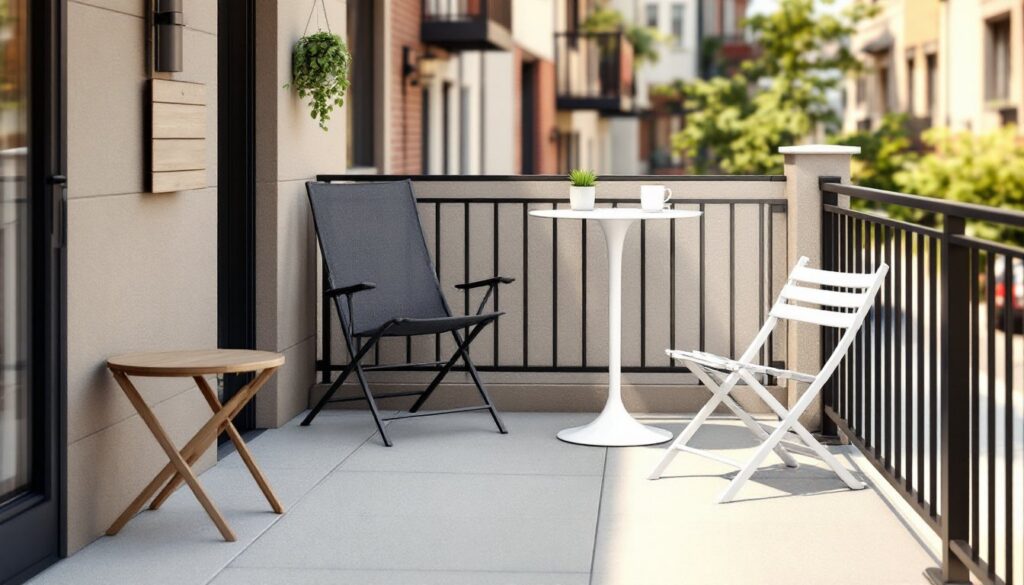
Folding and stackable chairs are the workhorses of small-patio furniture. Metal folding bistro chairs (the classic French café style) measure roughly 15 inches wide and 32 inches tall, and fold flat to 2 to 3 inches thick. They handle weekly use, store against a wall or in a closet, and weigh 8 to 12 pounds each, light enough to move single-handed.
Resin stackable chairs (often mistaken for cheap plastic) have come a long way. Quality models from brands like Fermob or Kartell use UV-stabilized polypropylene that resists fading and cracking for 5+ years. They stack four to six high, which matters if you’re storing them in a shed or garage over winter.
Wood folding chairs (eucalyptus or acacia) offer a warmer aesthetic but require annual oiling to prevent splitting. They’re bulkier when folded, usually 4 to 5 inches thick, and weigh more, making them better for semi-permanent setups rather than frequent stowing.
Avoid directors-style folding chairs with canvas seats. The fabric sags, collects moisture, and mildews in covered patios with poor airflow. Solid-seat folding chairs (wood slat or molded resin) dry faster and last longer.
For wall-mounted flexibility, folding wall tables can add surface area when needed and disappear when not in use, a smart solution for patios under 60 square feet.
Bistro Sets and Small Dining Options
A bistro set, typically a 24-to-30-inch round table with two chairs, is the gold standard for patios under 80 square feet. The round table eliminates corners that catch shins and optimizes seating in tight quarters.
Bar-height bistro sets (table at 40 to 42 inches, chairs at 28 to 30 inches seat height) work well on narrow balconies or patios with railings. The taller profile draws the eye up and makes low-ceiling covered patios feel less enclosed. But, bar-height seating isn’t ideal for long meals, plan on standard 28-to-30-inch table height if the patio doubles as a dining zone.
For slightly larger patios (100+ square feet), consider a 30×48-inch rectangular table. The narrow profile fits against a wall or railing, and the longer dimension seats four without requiring a full 60-inch round table. Look for tables with a single pedestal base rather than four legs, it maximizes knee clearance and chair positioning.
Drop-leaf tables add flexibility. A 20-inch-wide console table with two 10-inch leaves expands to 40 inches for meals, then folds back down for daily use. Make sure the leaf support mechanism is metal, not plastic, plastic brackets crack under the cantilevered weight of plates and elbows.
Skip glass-top tables in high-wind areas or homes with kids. Tempered glass is safe when it breaks, but replacement tops are expensive and often custom-order. Powder-coated aluminum or solid wood tops take more abuse and cost less to replace.
Space-Saving Furniture Layouts and Placement Tips
Furniture placement on a small patio isn’t decorative, it’s tactical. Poor layout wastes usable square footage and creates bottlenecks.
Anchor furniture to the longest wall or railing. On a 6×10-foot patio, place a bistro table or pair of chairs along the 10-foot side. This keeps the 6-foot width open for traffic flow. Centering furniture in the middle of a small patio creates narrow, unusable strips on all sides.
Maintain 18 to 24 inches of clearance around at least one side of seating for entry and exit. If chairs back up to a wall or railing, you can reduce rear clearance to 12 inches, but the access side needs elbow room. Measure with chairs pulled out, a 16-inch-deep chair requires 34 to 36 inches total (16 + 18) from the table edge to the wall behind it.
Use corners strategically. An L-shaped bench with storage underneath makes the most of a 90-degree corner while adding hidden space for cushions, grilling tools, or small planters. Build a simple bench with a hinged seat from 2×4 framing and 5/4×6 decking boards, total material cost around $80 to $120 depending on lumber grade.
Float a single lounge chair if the patio is under 60 square feet and dining isn’t a priority. Pair it with a 16-to-18-inch diameter side table rather than a full coffee table. Side tables tuck beside the chair and move easily: coffee tables in front of seating cut off access and create a visual barricade.
Avoid matchy-matchy sets that force you into a fixed layout. Buy chairs and tables separately so you can adjust quantities and arrangements as needs change. Two folding chairs and a small table work better than a four-piece conversation set that permanently consumes the space.
Vertical space is underused. Wall-mounted fold-down tables, hanging planters, and railing shelves keep floor space open. If the patio has a roof or pergola, overhead hooks hold string lights or hanging chairs, which use zero floor footprint.
Material and Style Choices for Small Outdoor Areas
Material choice affects durability, maintenance, weight, and visual perception, all critical on a small patio where every piece is visible.
Powder-coated aluminum is the best all-around material for small patios. It’s lightweight (easy to rearrange), rust-proof, and available in dozens of colors. Frames typically use 1 to 1.5-inch diameter tubing with 16-to-18-gauge wall thickness, anything thinner flexes and fatigues at welds. Aluminum furniture can stay outside year-round in most climates. Expect to pay $150 to $400 for a quality bistro set, mid-2026 pricing.
Steel (powder-coated or galvanized) offers more traditional styling and better wind resistance but weighs significantly more. A steel bistro chair runs 12 to 18 pounds versus 8 to 10 for aluminum. Steel is prone to rust once the coating chips, so inspect welds and joints annually and touch up with rust-inhibiting primer and paint.
Wood furniture (teak, eucalyptus, acacia) brings warmth but requires maintenance. Teak weathers to gray unless oiled every 6 to 12 months. Eucalyptus and acacia are more affordable but less naturally rot-resistant, plan on replacing untreated pieces every 3 to 5 years in wet climates. Wood furniture is heavier, which limits flexibility but helps in windy areas.
Resin wicker over aluminum frames mimics natural wicker without the splinters and mildew. Quality resin wicker uses high-density polyethylene (HDPE) strands woven over powder-coated aluminum. Cheap wicker uses hollow PVC strands that crack under UV exposure. Check the warranty, 5+ years indicates HDPE: 1 to 2 years signals budget-grade material.
Color and finish impact perceived space. Light neutrals (white, sand, pale gray) reflect light and feel airy, important on covered or shaded patios. Dark finishes (charcoal, bronze, black) add drama but visually contract space, reserve them for sunny, open patios where you want to create cozy definition.
Slatted, perforated, or mesh designs look lighter than solid furniture. A chair back with vertical slats maintains sightlines, making the patio feel less enclosed than a solid-panel back. Mesh seating (like modern sling chairs used in contemporary design) stretches over the frame and weighs almost nothing, ideal for frequent movers.
Style considerations: Modern minimalist furniture (clean lines, slim profiles, neutral tones) works best in compact spaces because it doesn’t compete for attention. Ornate or heavily cushioned pieces (think deep-seat sectionals with oversized pillows) overwhelm small patios. If traditional style matters, choose bistro or café designs originally intended for tight European streetscapes rather than sprawling Southern porches.
Cushions should be removable and quick-drying. Solution-dyed acrylic fabric (Sunbrella is the common brand) resists fading and mildew but still needs to be brought inside during heavy rain or stored for winter. Cushions add comfort but also visual bulk, on very small patios, consider skipping cushions on chairs and using a single lumbar pillow instead.
Conclusion
Small patios reward editing and intentionality. Choose furniture that folds, stacks, or nests. Prioritize lightweight materials and open designs that don’t block sightlines. Anchor pieces to walls or railings, maintain walkway clearance, and resist the urge to fill every inch. Done right, a 60-square-foot patio can handle morning coffee, weekend dinners, and a place to breathe, no square footage wasted.