Aluminum patio furniture has come a long way from the flimsy folding chairs of decades past. Today’s aluminum outdoor pieces combine the durability of commercial-grade construction with designs that look right at home in everything from a compact balcony to a sprawling backyard. If you’re shopping for outdoor furniture that can handle real weather without constant upkeep, and without the weight penalty of wrought iron or the maintenance demands of wood, aluminum deserves a serious look. This guide breaks down what makes aluminum a smart material choice, highlights top-rated sets and pieces for 2026, and walks through the practical considerations that’ll help you pick furniture that actually fits your space and lifestyle.
Table of Contents
ToggleKey Takeaways
- Aluminum patio furniture resists corrosion better than steel and requires minimal maintenance compared to wood or wrought iron, making it an ideal choice for outdoor spaces that experience harsh weather.
- Extruded aluminum frames with 1.5mm+ wall thickness and welded joints outperform budget alternatives, offering superior durability and stability for dining sets and seating that handles daily use.
- Proper sizing and layout planning—including 36 inches of clearance behind dining chairs and measured cushion compatibility—ensures your aluminum furniture fits your space without overwhelming smaller patios.
- Textilene mesh and quality cushions matter as much as the frame itself; look for UV-stable, quick-drying fabrics with double-stitched seams and easily replaceable components on best aluminum lounge chairs and sectionals.
- Simple monthly washing with soapy water, twice-yearly hardware inspections, and annual automotive paste wax application keep aluminum furniture looking sharp and extend its lifespan significantly.
- Aluminum is 100% recyclable without quality loss, offering a sustainable patio furniture solution that reduces environmental impact compared to composite plastics or treated wood alternatives.
Why Aluminum Is the Smart Choice for Patio Furniture
Aluminum brings several genuine advantages to outdoor furniture, starting with its corrosion resistance. Unlike steel, which rusts when the finish chips, aluminum forms a protective oxide layer that prevents further oxidation. That means you won’t find orange stains bleeding onto your deck or flaking metal after a couple seasons of rain.
The weight-to-strength ratio is another practical win. A typical aluminum dining chair weighs 8–12 pounds compared to 20–30 pounds for a comparable wrought iron piece. You can move chairs around for cleaning, rearrange your setup for a gathering, or haul everything into storage without throwing out your back. Even though the lighter weight, extruded aluminum frames offer solid structural integrity, many commercial-grade sets use 1.2–2.0mm wall thickness tubing, which holds up to daily use and weight loads comparable to heavier materials.
Aluminum also handles temperature extremes better than most alternatives. It won’t crack in freezing temps like some resins, and it dissipates heat quickly, so you’re not sitting on a scalding seat after it’s been in full sun (though cushions still help). The material doesn’t require annual staining, sealing, or refinishing. A quick wash with soapy water keeps most sets looking fresh.
Finally, aluminum is 100% recyclable without quality loss. If sustainability matters to your project, buying aluminum furniture means you’re investing in a material that has a genuine end-of-life recovery path, unlike composite plastics that often end up in landfills.
Top-Rated Aluminum Patio Furniture Sets and Pieces
Best Aluminum Dining Sets for Outdoor Entertaining
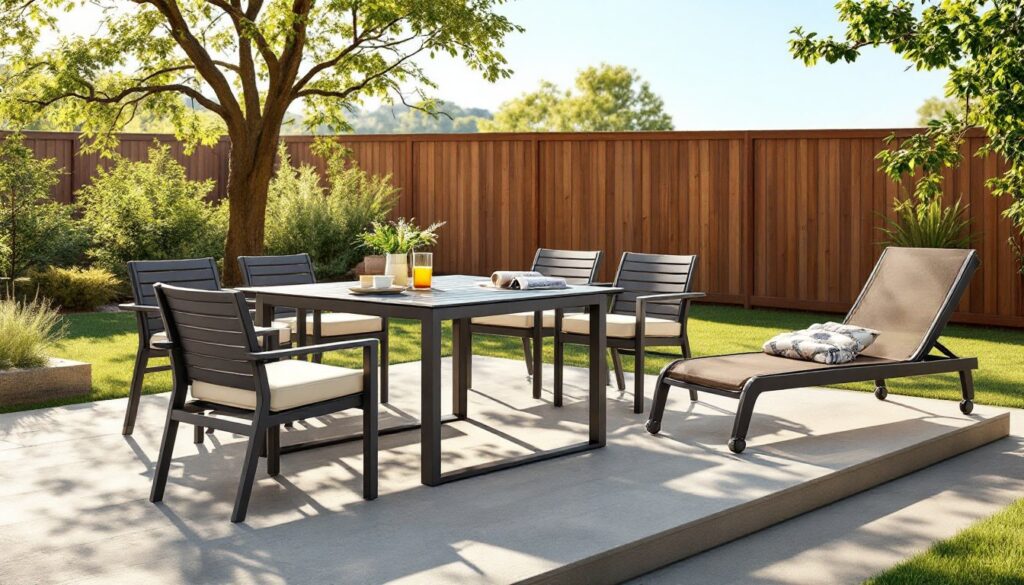
For homeowners who actually use their patios for meals, a 7-piece aluminum dining set typically includes a table (60–72 inches long) and six chairs. Look for sets with powder-coated finishes in matte black, bronze, or charcoal, these hide minor scratches better than glossy coatings and resist UV fading.
Extruded aluminum frames outperform cast aluminum in dining chairs because they handle repeated stress better. Cast aluminum can be brittle at joints: extruded pieces have consistent wall thickness and fewer weak points. Check that chair legs have adjustable glides or leveling feet, patios and decks are rarely perfectly flat, and wobbly chairs are a constant annoyance.
Table tops come in a few formats. Slatted aluminum tops allow water to drain and air to circulate, which prevents mildew buildup underneath placemats. Tempered glass tops (typically 5–8mm thick) give a cleaner look and are easier to wipe down, but they do add weight and require more careful handling during setup. Some manufacturers offer powder-coated aluminum tops with a faux wood grain, a middle-ground option that drains well and looks less industrial than plain slats.
For smaller spaces, a bistro set (30-inch round table and two chairs) works well on balconies or breakfast nooks. These often fold flat for winter storage and weigh under 25 pounds total.
Best Aluminum Lounge Chairs and Seating
Aluminum chaise lounges are where you’ll see the biggest range in quality. Budget models use thin-wall tubing (under 1.0mm) and plastic-coated fabric slings that sag within a season. Better options feature textilene mesh, a PVC-coated polyester that’s UV-stable, quick-drying, and holds its tension. Look for mesh that’s double-stitched at stress points and replaceable if it ever does wear out.
Adjustable chaises should have at least four backrest positions and a mechanism that locks securely. Cheaper spring-pin systems can pop loose: a ratcheting bar or notched frame is more reliable. Wheels on the back legs (typically 3-inch diameter) make it easier to reposition for sun-tracking without dragging and scratching your deck.
For conversation areas, deep-seating aluminum sectionals have become popular. These use the same frame construction as dining sets but pair with 4–6-inch cushions (sold separately in most cases). Frames should have welded corners rather than bolted joints, welding eliminates flex and squeaking over time. Modular pieces let you reconfigure layouts, but make sure connecting hardware is stainless steel, not zinc-plated, to avoid corrosion where pieces bolt together.
Aluminum rocking chairs and gliders are niche but worth mentioning for covered porches. The low weight makes the rocking motion smoother than wood or resin equivalents, and the frames won’t warp or splinter with humidity changes that many Southern homeowners deal with year-round.
How to Choose the Right Aluminum Patio Furniture for Your Space
Start by measuring your usable space, not just your total patio footprint. Account for traffic paths, you’ll want at least 36 inches of clearance behind dining chairs when they’re pulled out, and 24 inches between furniture pieces for comfortable movement. Sketch a to-scale floor plan if your space is tight: furniture that looks fine in a showroom can overwhelm a 10×12-foot patio.
Frame gauge and construction matter more than brand names. Ask about (or check product specs for) wall thickness on tubular frames, anything above 1.5mm is solid for residential use. Welded joints trump bolted assembly for longevity. If you’re buying online, look for listings that specify “commercial-grade” or “hospitality-grade” construction: these terms usually mean thicker aluminum and reinforced stress points.
Finish type affects both appearance and maintenance. Powder coating is standard and works well, but anodized aluminum is a step up, it’s a harder, more scratch-resistant surface created through an electrochemical process. Anodizing also comes in more natural metallic tones (bronze, champagne, graphite) if you want to avoid the flat, painted look.
Consider cushion compatibility early. Many aluminum frames are sold “bare” with the assumption you’ll add cushions. Standard seat cushions are 18–20 inches square and 2–3 inches thick for dining chairs, while deep-seating pieces use 24×24-inch cushions that are 4–6 inches thick. Measure before you buy, there’s nothing more frustrating than finding the perfect cushions only to discover they’re half an inch too wide for your chair frames.
If you live in a high-wind area, lighter aluminum furniture can blow around during storms. Look for sets that include tie-down options (grommets in cushions, frame holes for ground anchors) or plan to store loose pieces during severe weather. Alternatively, choose heavier styles like cast aluminum or add weight to table bases.
Finally, think about seasonal storage. Aluminum won’t rust if left out year-round, but cushions, glass tops, and finishes will last longer with winter protection. Stackable dining chairs and folding bistro sets make storage easier if you don’t have a large shed or garage. If you’re keeping furniture out all winter, invest in breathable covers (not plastic tarps, which trap moisture and promote mildew), UV-resistant polyester with vents and tie-downs will protect finishes without creating a greenhouse effect underneath.
Maintenance Tips to Keep Your Aluminum Furniture Looking New
Aluminum furniture is low-maintenance, but it’s not no-maintenance. A few routine tasks will keep it looking sharp and extend its lifespan.
Monthly washing is the bare minimum. Use a bucket of warm water with a few drops of dish soap and a soft-bristle brush or microfiber cloth. Scrub frames, rinse with a garden hose, and let air-dry. This removes pollen, bird droppings, and organic debris before they stain or etch the finish. Avoid pressure washers on powder-coated aluminum, the high pressure can chip the coating at seams and joints.
For stubborn stains or oxidation, make a paste of baking soda and water, apply with a soft cloth, and rub gently. For coastal environments where salt spray is an issue, rinse furniture weekly with fresh water, salt accelerates corrosion even on aluminum if left to accumulate.
Inspect joints and hardware twice a year. Tighten any loose bolts (most aluminum furniture uses 8mm or 10mm hex bolts). If you see white powder forming around joints, that’s aluminum oxide, not dangerous, but a sign moisture is getting into crevices. Wipe it off and apply a thin coat of car wax to the area to seal it.
Touch up scratches in powder coating promptly. Deep scratches expose bare aluminum, which can oxidize and discolor. Clean the area with rubbing alcohol, then use an automotive touch-up paint that matches your furniture’s color (most manufacturers list paint codes in product manuals). Apply with a fine brush, let dry, and buff lightly with fine-grit sandpaper (320-grit) if needed to level the surface.
Cushions and fabric require separate care. Remove cushion covers and machine wash according to manufacturer instructions (usually cold water, mild detergent, air dry). For non-removable textilene slings, scrub with soapy water and rinse. Don’t use bleach, it degrades UV inhibitors in the fabric. Store cushions indoors during winter or in a ventilated deck box: even “outdoor” fabrics will fade and mildew if left wet and covered for months.
Finally, apply automotive paste wax once or twice a year to aluminum frames. This adds a protective layer that repels water and makes future cleaning easier. Use a clean microfiber cloth, apply in circular motions, and buff to a low sheen. This step is especially useful for furniture in garden and landscape settings where organic acids from decomposing leaves can dull finishes over time.
Conclusion
Aluminum patio furniture offers a practical combination of durability, light weight, and low maintenance that few other materials match. Whether you’re furnishing a dining area for weekend barbecues or setting up a lounge space for relaxing evenings outdoors, understanding frame construction, finish quality, and care requirements will help you choose pieces that hold up season after season. Focus on extruded frames with solid wall thickness, invest in proper cushions and covers, and stick to a simple cleaning routine, you’ll have outdoor furniture that looks good and works hard for years to come.