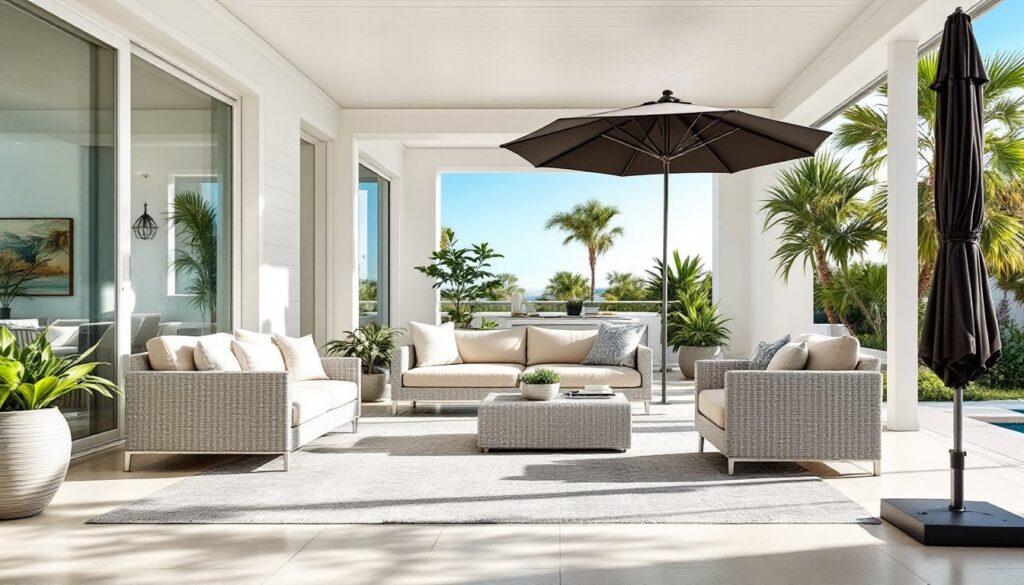
Florida’s climate lets you use your outdoor spaces year-round, but it also puts furniture through the wringer. Salt spray, UV rays, afternoon thunderstorms, and humidity create a punishing test for materials that might hold up fine in Arizona or Tennessee. Choosing patio furniture for Florida isn’t just about style, it’s about durability, maintenance, and knowing which materials will still look good five years from now. This guide covers what works, what doesn’t, and how to keep your outdoor investment looking sharp even though the state’s relentless weather.
Table of Contents
ToggleKey Takeaways
- Florida patio furniture must withstand salt spray, 230+ sunny days annually, 60-90% humidity, and rapid wet-dry cycles that damage most standard outdoor materials.
- Aluminum with powder-coated finishes, marine-grade polymer wicker, teak, and solution-dyed acrylic fabrics (like Sunbrella) are the best materials for Floridian patio furniture due to superior weather resistance.
- Coastal properties within one mile of saltwater require stainless steel hardware and aluminum frames exclusively, while inland areas beyond three miles have more material flexibility.
- Monthly cleaning, annual teak oiling, quarterly hardware inspections, and proper cushion storage during rainy season are essential maintenance practices to extend Floridian patio furniture longevity.
- Shop local outdoor furniture specialists or specialty dealers in late summer (August-September) or January for quality pieces with coastal warranties, rather than big-box stores with inconsistent durability standards.
What Makes Floridian Patio Furniture Unique?
Florida’s outdoor furniture faces challenges most other states don’t deal with simultaneously. Coastal properties contend with salt air that corrodes metal hardware and degrades fabrics. Inland areas still get intense UV exposure, Florida averages 230+ sunny days annually, and that UV index regularly hits 10 or higher in summer.
Humidity runs 60-90% most of the year, creating ideal conditions for mildew on cushions and rust on fasteners. Afternoon storms dump water fast, then the sun bakes everything dry in hours. That wet-dry cycle is harder on materials than consistent dampness or consistent dryness.
Floridian patio furniture is built, or should be, to handle these extremes without constant babying. That means marine-grade hardware, solution-dyed acrylic fabrics, and frames that shed water rather than trap it. Furniture that works in milder climates often fails here within two seasons if it’s not spec’d correctly.
Best Materials for Florida’s Climate
Weather-Resistant Options That Last
Aluminum is the workhorse material for Florida patios. It doesn’t rust, it’s lightweight enough to move for storm prep, and powder-coated finishes hold up well against UV. Look for welded joints rather than bolted, fewer places for water to sit. Avoid bare aluminum: it oxidizes and stains over time.
Marine-grade polymer wicker (also called all-weather wicker) mimics natural rattan but won’t rot or crack. Quality versions use high-density polyethylene (HDPE) strands woven over aluminum or steel frames. Cheaper versions use PVC, which gets brittle in sun. Check the weave, tight, uniform patterns last longer.
Teak is the gold standard for wood, thanks to natural oils that repel moisture and resist insects. It weathers to a silver-gray patina unless you oil it annually. Expect to pay $150+ per linear foot for quality pieces. Eucalyptus offers a budget alternative with similar density and rot resistance, though it needs more frequent sealing.
Powder-coated steel works if you’re away from the coast, beyond three miles inland, salt spray drops off significantly. Use stainless steel hardware regardless. Skip wrought iron unless you’re committed to annual rust treatment.
For cushions and upholstery, solution-dyed acrylic (brands like Sunbrella) resists fading and mildew far better than polyester. The color goes through the fiber, not just on the surface, so it won’t bleach out. Closed-cell foam cores dry faster than open-cell and won’t trap moisture that leads to mold.
Concrete and stone tables handle Florida weather without complaint, but they’re permanent fixtures, plan placement carefully. Pair them with lighter chairs you can rearrange. Many outdoor furniture ideas incorporate mixed materials for flexibility and visual interest.
Popular Floridian Patio Furniture Styles
Coastal Contemporary dominates South Florida, clean lines, neutral palettes (white, sand, gray), and low-profile seating. Aluminum frames with light-colored cushions keep the look airy. It pairs well with tile or concrete patios and doesn’t compete with ocean views.
Tropical Resort leans into color and pattern. Deep seating with thick cushions in blues, greens, or coral. Wicker or teak frames. This style works for lanais and screened porches where furniture gets some weather protection. Think of the aesthetic seen in many Southern outdoor spaces that balance comfort with regional character.
Modern Minimalist uses powder-coated aluminum or steel in matte black or bronze. Slim profiles, modular sectionals, and geometric side tables. Cushions stay thin and firm. It’s low-maintenance and works well in urban settings or around pools where you want a crisp, uncluttered look.
Mediterranean/Spanish Revival features wrought iron (if maintained), terra cotta accents, and arched details. Heavier, more ornate. Best suited for covered patios or courtyards where direct rain exposure is limited. Requires more upkeep in Florida’s climate but fits the architecture common in older Florida homes.
Choose a style that matches your home’s architecture and your willingness to maintain it. A Mediterranean set looks great but needs seasonal rust checks. Coastal contemporary is nearly set-and-forget.
How to Choose the Right Furniture for Your Space
Start by measuring your patio or lanai. Allow 36 inches of clearance around dining tables for chair movement and foot traffic. For conversation sets, 18-24 inches between seats lets people pass without climbing over furniture.
Consider sun exposure. Full-sun areas need lighter-colored cushions (dark fabrics get scorching hot) and frames that don’t retain heat. Aluminum and wicker stay cooler than steel or dark wood.
Covered vs. uncovered changes your material priorities. Screened lanais protect from rain and reduce UV by 30-50%, so you can use a broader range of fabrics and finishes. Fully exposed patios need the toughest materials, marine-grade everything.
Wind is a factor, especially in coastal areas. Lightweight aluminum chairs blow around in storms. Either plan to store them or choose heavier pieces. Tables with umbrella holes need a sturdy base, at least 50 lbs for a 9-foot umbrella, more if you’re near the water.
Scale matters. Oversized sectionals overwhelm small patios. A 10×12-foot space fits a bistro set or two lounge chairs comfortably. Measure before you buy, and use painter’s tape on the ground to mock up furniture footprints.
If you’re near the coast (within a mile), avoid any exposed steel or iron hardware. Stainless steel fasteners and aluminum frames are non-negotiable. Farther inland, you have more flexibility.
Maintenance Tips to Extend Furniture Life
Monthly cleaning prevents buildup that degrades materials. Hose down frames and wipe with mild dish soap and water. Skip pressure washers on wicker, they fray the weave. For aluminum, a car wax applied twice a year adds UV protection and makes cleaning easier.
Cushion care is critical in Florida. Store cushions indoors during rainy season if possible, or use a ventilated storage box. Solid plastic bins trap moisture and grow mildew. Wash removable covers every 4-6 weeks in cold water, air dry. For mildew spots, use a 10:1 water-to-bleach solution, scrub gently, and rinse thoroughly.
Teak and eucalyptus need annual oiling if you want to maintain the honey-brown color. Use teak oil or a UV-resistant wood sealer. If you let it weather naturally, scrub with a teak cleaner once a year to remove dirt and mildew before it stains.
Check hardware every few months. Tighten loose bolts, replace any rusted screws with stainless steel versions. Coastal residents should inspect monthly, salt accelerates corrosion.
Umbrella maintenance: Close umbrellas during storms, even if they’re rated for wind. The crank mechanisms fail under sustained gusts. Hose off fabric monthly to prevent mildew, and treat with a fabric UV protectant spray annually.
Off-season storage isn’t mandatory in Florida since you’ll use outdoor spaces year-round, but if you’re seasonal, store cushions indoors and cover frames with breathable furniture covers. Avoid plastic tarps, they trap condensation.
Where to Buy Quality Patio Furniture in Florida
Local outdoor furniture specialists know Florida’s climate and stock appropriate materials. Ask about warranty coverage specifically for coastal use, some manufacturers void warranties within a certain distance from saltwater.
Big-box stores (Home Depot, Lowe’s) carry budget-friendly options, but quality varies widely. Stick to their higher-end lines if you want pieces that last more than two seasons. Check the hardware before buying, if it’s already rusting in the store, pass.
Online retailers offer broader selection and often better prices, but you can’t inspect welds, test cushion firmness, or verify fabric weight. Read reviews from other Florida buyers. Look for sellers with strong return policies since shipping damage is common with furniture.
Specialty wicker and teak dealers charge more but offer better construction and materials. Expect to spend $2,000-5,000 for a quality four-piece conversation set. That sounds steep until you compare it to replacing a $600 set every two years.
Estate sales and consignment can turn up well-made older pieces, especially teak and wrought iron. Inspect carefully for structural damage and factor in refinishing costs. A solid teak table that needs sanding and sealing is still a better buy than new particleboard.
Buy in late summer (August-September) when retailers clear inventory for fall shipments, or in January after the holiday rush. Avoid buying in March-April when prices peak for snowbird season. Many design-focused retailers feature curated outdoor collections that prioritize both aesthetics and durability.